Favorites0 items in wishlist
Membrane structures enable lightweight, large-span and architecturally expressive roof and facade constructions. Through tensioned membranes, cables and steel structures, building envelopes are created with low self-weight, high functionality and extensive design freedom.
The choice of materials for membrane structures depends on usage, span, transparency, fire protection requirements, weather exposure and the desired service life. PVC-coated polyester fabrics are suitable for economical textile constructions. PTFE-coated glass fabrics offer particularly high durability and weather resistance. ETFE foils are frequently used where high transparency and low weight are required.
Membrane structures are pre-stressed surface structures: unlike solid constructions, they primarily transfer loads through tensile forces. The membrane gains stability through its shape, pre-tensioning and connection to edge cables, steel arches, masts or additional supporting structures.
For this reason, form-finding, cutting patterns, load transfer, drainage, fixing systems and installation sequences must all be considered from the earliest planning stages.
Membrane roofs are particularly suitable for large, column-free coverings – for example at stadiums, arenas, exhibition halls, airports, railway stations, sports facilities, event spaces and entrance areas.
Due to their low self-weight, large spans can be achieved economically. Depending on the material, membrane roofs can provide weather protection, light transmission, shading or distinctive architectural effects.
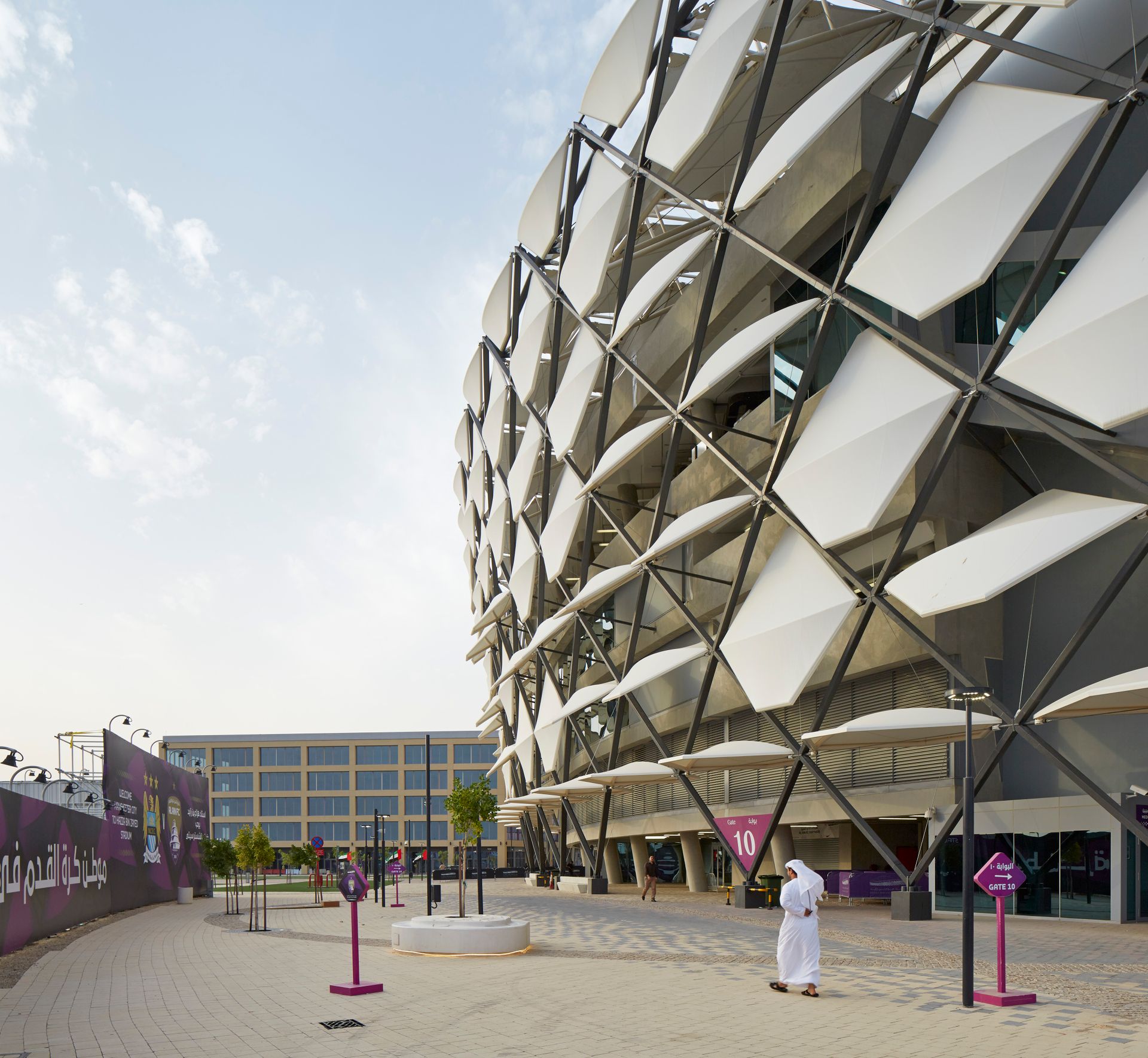
Membrane facades create lightweight building envelopes with a distinctive visual impact. They can be used as solar shading, weather protection, a second building skin, media façades or architectural facade elements.
Especially for stadiums, event buildings, car parks, public buildings and special structures, membrane facades provide economical and architecturally striking solutions.
The Hazza Bin Zayed Stadium in Al Ain is one of the architectural landmarks of the United Arab Emirates. For this distinctive stadium, we were responsible for the design, fabrication and installation of the complex diagrid façade. Thanks to a parametric design approach and a high degree of prefabrication, the façade elements could be efficiently produced and installed within a tight timeframe.

Membrane structures are among the most efficient lightweight systems in modern steel and facade construction. They enable large spans, free-form geometries and strong architectural impact with comparatively low material usage – typically used for stadium roofs, arenas, airports, railway stations, exhibition halls, event buildings and entrance canopies.
Lindner Steel & Glass develops membrane structures as bespoke roof and facade solutions based on close coordination between materials, geometry, tensioning, supporting structures and installation processes.
As roofs, membrane structures protect large areas with minimal supporting columns. As facades, they serve as solar protection, weather protection, a second skin or an architectural design element.