Favorites0 items in wishlist
Military properties, embassies, government buildings, and critical infrastructure facilities are potential targets of armed attacks – ranging from handguns to rifles firing hardened-core ammunition. Here, every millisecond of a component's resistance duration counts.
The Lindner Group develops bullet-resistant systems that combine certified ballistic protective performance with the functional requirements of security-critical buildings. Our solutions can be flexibly integrated – from guardhouses and checkpoints to command and security control centers.

Our systems are tested according to DIN EN 1522/1523 as well as VPAM standards and stand for uncompromising reliability. For facilities in the defence and security sector – barracks, guardhouses, embassies, command centers – the higher resistance classes are typically used, capable of withstanding rifles and hardened-core ammunition. The systems can be seamlessly integrated into any building structure, without protective performance coming at the expense of functionality or accessibility.

Bullet-resistant doors secure the most critical points of a facility – guardhouses, checkpoints, entrances to security areas. Our doors can be designed to be multifunctional upon request, combining certified ballistic resistance with access control, panic function, and emergency exit door solutions. This makes them a central component of a holistic security concept that also integrates with the requirements of security personnel and security control centers.

Real-world threat situations in the defence sector rarely occur in isolation. That's why our systems go beyond pure ballistic resistance and can be specifically combined with burglary resistance, explosion protection, or resistance to thrown objects. The result is integrated security solutions that comprehensively protect people, information, and assets – as an integral part of our complete fit-out solutions for security-relevant buildings.
Our bullet-resistant systems secure barracks and military properties, embassies and government buildings, courts and government authorities, data centers and critical infrastructure facilities, as well as defence industry sites. They provide reliable protection against firearm threats and offer targeted resistance against attacks with handguns and rifles in accordance with the applicable bullet resistance classes under DIN EN 1522/1523 or VPAM.
Lindner Group's security solutions are based on precisely coordinated materials and well-engineered constructions. Our products are tested under realistic conditions and meet the highest standards and requirements. Whether wall, door, window, or façade elements – our bullet-resistant systems integrate seamlessly into existing security concepts and, together with adjoining components, form a seamless level of protection.
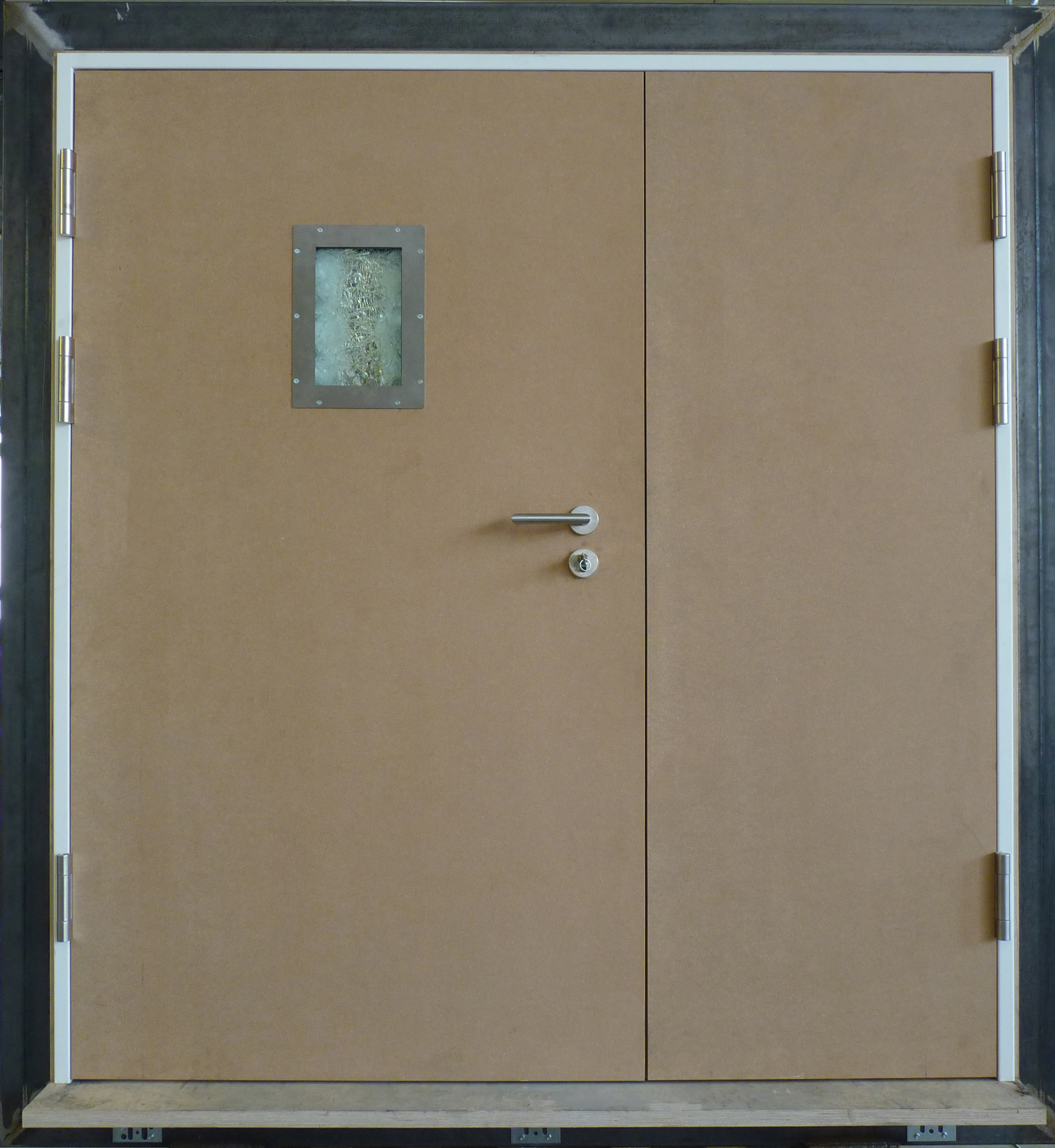
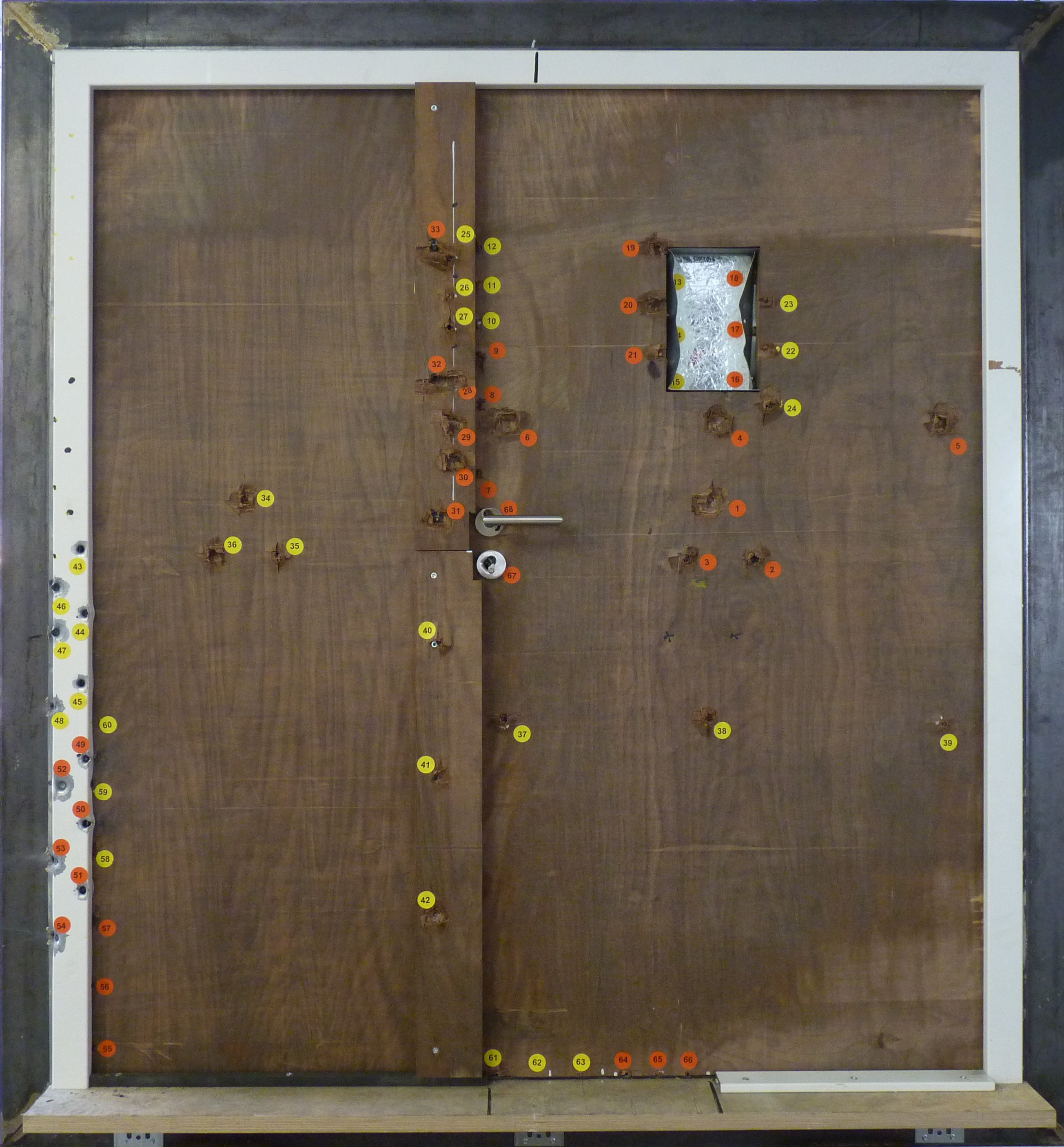
A key component of our protection concept is our bullet-resistant doors. They serve as a robust physical barrier at security-critical access points and impress with certified resistance against gunfire in accordance with the recognized European standards DIN EN 1522/1523. This ensures that our door systems deliver exactly the protective performance that security personnel and facility protection can rely on in a real-world scenario.
Our doors are available in various resistance classes – up to FB4NS (non-splintering) – and are individually tailored to the respective threat scenario. A key requirement is that no fragments may penetrate the protected area. Our doors therefore provide reliable protection in sensitive environments, from barracks gates and guardhouses to command centers and security-critical government facilities.


Bullet-resistant glazing plays a central role in ballistic protection, with requirements defined in DIN EN 1063. This standard specifies testing procedures and the classification of security glazing according to the type, caliber, and weight of potential projectiles. For facilities in the defence sector – such as checkpoints, command centers, or vehicle sally ports – glazing from the higher BR classes is frequently used, capable of withstanding rifle fire as well.
The key requirement is that no projectile may penetrate the protected area. In addition to the glazing itself, frames and joints must also be designed so that protection remains reliable and comprehensive – a principle that must be implemented particularly rigorously in security-critical facilities.
Further expertise in security infrastructure
References
Confidentiality that protects
For security-critical construction projects, we set ourselves particularly high protection standards – extending far beyond the construction phase itself. Out of consideration for the security of our clients and their properties, we deliberately refrain from publishing project details on this page. This discretion is part of our security commitment. You can nevertheless gain an impression of the quality Lindner Group delivers in construction and fit-out: Our general references show the ambition, precision and experience with which we deliver projects worldwide – forming the basis of the trust we earn every day, even in the most sensitive areas.