Favorites0 items in wishlist
Lindner systems are characterised by the highest quality and exceptional durability. A NORTEC raised access floor panel, for example, has a service life of 50 years or more. However, this technical service life is rarely reached during refurbishment of existing buildings or in rental spaces with frequent alterations and short periods of use, often less than 10 years. As a result, well-preserved construction products can end up in skips.
We want to counteract this waste and make full use of the materials' value potential. That is why Lindner takes back used products and/or refurbishes them for a new use or function.
The starting point for our LinLoop concept was the take-back and refurbishment of floor panels in 2021. In line with the principles of the circular economy, we offer take-back and reuse options for selected products and materials at the end of their service life, with the aim of reducing waste volumes, emissions and the use of primary resources.
We apply the LinLoop concept to partition and ceiling systems as well as timber doors. By taking back and refurbishing products, we provide not only an environmental benefit but also an economic benefit by returning materials to the cycle for refurbishment, conversion and new-build projects.
Are you currently refurbishing a building and have come across a well-preserved raised access floor?
Get in touch with us. We will visit you, assess the panels and provide you with a quotation. Depending on their condition, returning used floor panels to us will generally incur lower costs than sending them to landfill.


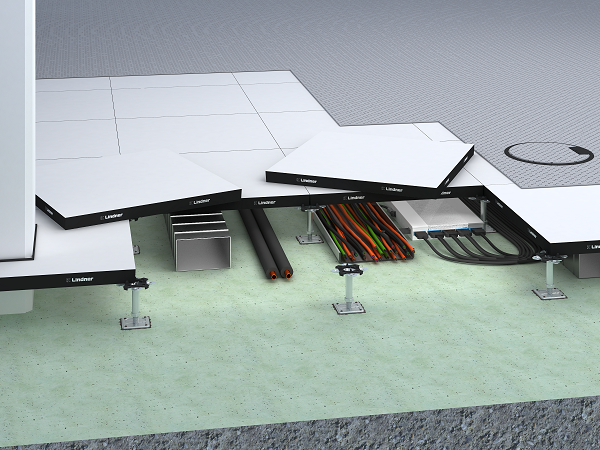
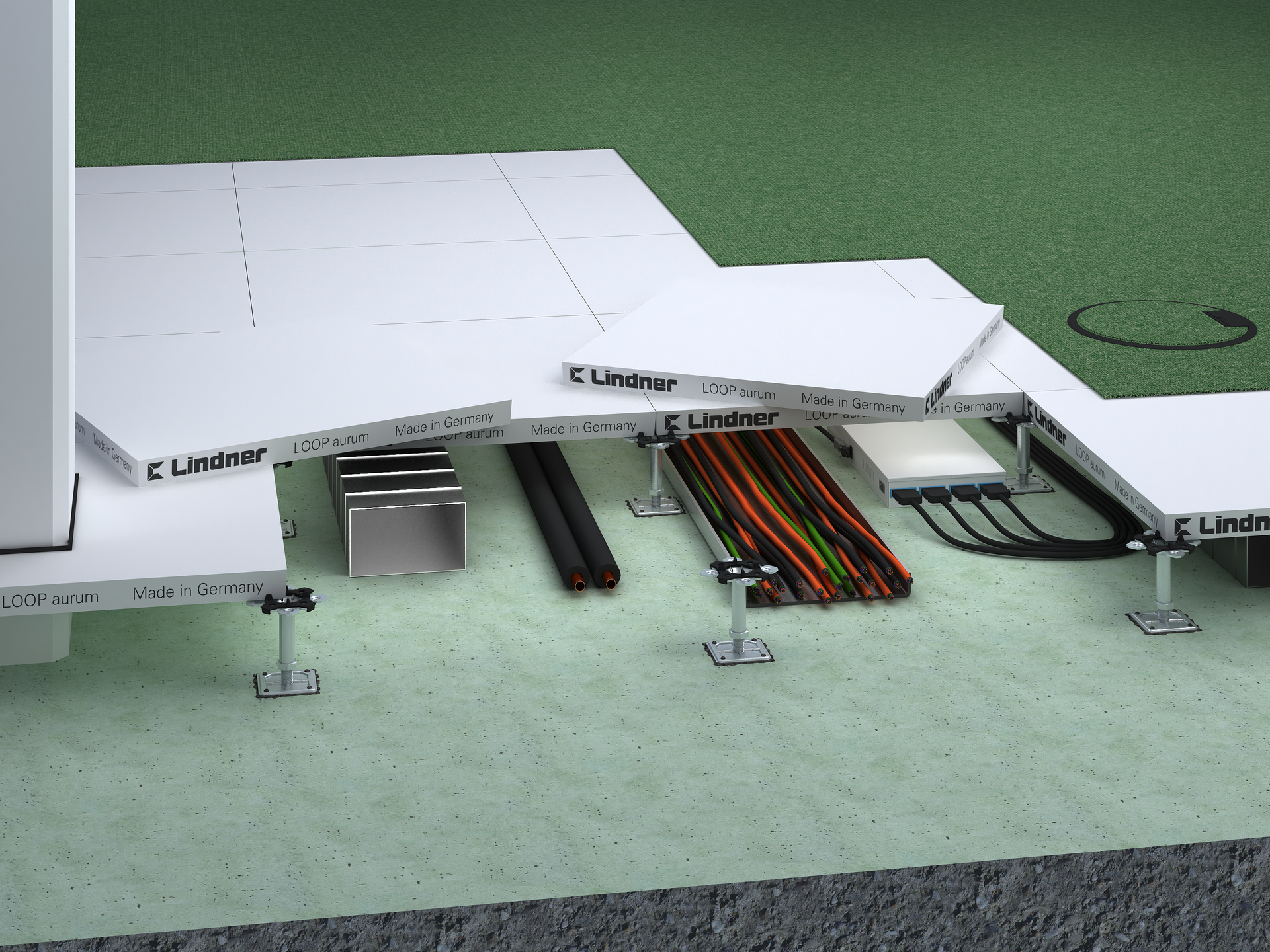
The refurbished panels are given a new use cycle as LOOP prime, LOOP aurum, RELIFE or ADDLIFE. In addition to the return and rental options, Lindner also offers a replacement guarantee for potential extensions or refurbishment measures within 20 years.
Lindner SE | Floors
We are committed to material-efficient construction methods with reduced use of primary raw materials and want to help counter the growing demand for these resources. Instead of costly disposal that results in the loss of materials at the end of their service life, we therefore focus on refurbishing selected construction materials.
Our refurbished raised access floor panels LOOP aurum and LOOP prime, made from used gypsum fibre panels, as well as RELIFE, made from used wood-based panels, reintroduce used materials into defined recovery processes and help prevent the waste of valuable resources.
Lindner is a full-service provider for the entire interior and building envelope. We offer ReUse concepts in line with the R-strategies not only for floors, but also for ceilings, walls, doors and building envelopes, combined with comprehensive services and solutions for building services and insulation technology.
Lindner ist der Komplettanbieter für den gesamten Innenraum und Gebäudehülle. Wir bieten wir ReUse Konzepte im Sinne der R-Strategien nicht nur für Boden, sondern auch für Decken, Wände, Türen und Gebäudehülle an – kombiniert mit umfassenden Service- und Leistungsangebote für Gebäudetechnik sowie Isoliertechnik.
ReUse – Direct continued use in a new context
When the tenant changed at Fleet Office II in Hamburg, existing Lindner Life Clear and Lindner Life Pure 620 glass partition systems as well as Plafotherm® DS 320 chilled ceiling sails were dismantled and directly reused in their original function. The potential CO₂ savings during the second life cycle of the glass partitions amount to 68%.
At the Francis office building in the Althan Quartier in Vienna, the revitalisation of an existing railway building created a modern working environment. Flexible zoning elements made from second-life materials achieved a potential 97% reduction in CO₂ emissions during the production phase for CAS Rooms.
ReFurbish – Refurbish instead of replace
When redesigning an office floor in Herzogenaurach, Schaeffler opted for dismantling with material recovery. Used calcium sulphate raised access floor panels were dismantled and refurbished in Arnstorf: robotically milled, with their surfaces and edges renewed and fitted with new edge banding. Based on a verified life-cycle assessment (EPD), the refurbished LOOP raised access floor panels have a CO₂ footprint up to 79% lower than comparable new products.
At the ERGO Group AG complex in Munich, the metal wall panels in the atrium showed significant signs of ageing after 30 years of use. The wall panels, originally manufactured by Lindner, were carefully dismantled on site, sanded down in Arnstorf and recoated. This restored the distinctive appearance of the reception hall without the need for new production.
At Fleet Office II, fabric-covered Lindner metal absorbers and acoustic wall images were also dismantled, re-covered with new fabric and reinstalled. A total of 65 elements were refurbished and repositioned. The potential CO₂ savings during the production phase for refurbished MUTE+® metal absorbers amount to 84%.
ReManufacture – System components for reuse
At the MediaMarktSaturn Campus in Ingolstadt, installed Lindner system products, including partition system frames, profiles and components, were professionally dismantled and stored in Arnstorf. There, they undergo an active refurbishment process: inspection, technical and visual adaptation to new usage scenarios and storage for structured reinstallation in future projects.
RePurpose – Giving existing materials a new function
At the Am Humboldthain development in Berlin, around 30,000 m² of metal ceiling panels were systematically dismantled and refurbished by Lindner. They are intended to be reused as building components in the newly emerging development. For example, the elements could be converted into heating and cooling ceilings in future by adding heat-conducting profiles. The potential CO₂ savings compared with new products amount to 54%.
RePair – Repair and preserve
The polygonal steel curtain wall façades of the Taunus Sparkasse Campus in Bad Homburg were upgraded through targeted repairs: solar shading systems were rewired, pressure plates and cover caps were fitted with new drainage openings, insulating glazing was cleaned and seals were replaced. This significantly extended the service life of the building envelope without altering its distinctive appearance.
At Erding District Hospital, 500 LED retrofit kits were individually developed for existing luminaire housings. The existing housings and covers were retained in full; only the outdated light source was replaced.
ReCycle – Keeping raw materials in the loop
Where product-level reuse is no longer possible, we preserve raw materials through the separation of individual material streams and internal recycling processes. At our recycling plant in Dettelbach, with a capacity of 50,000 tonnes per year, gypsum and cardboard are processed together and thermally reactivated. In addition, around 100,000 tonnes of milling and sanding dust have been internally recycled over the past six years, reducing the use of virgin gypsum by around 87,000 tonnes. Cardboard is returned to the fibre cycle.
ReDuce – Efficiency starts with design
The Lindner Life Stereo GCC partition system delivers the same performance as the standard product, while using a material containing up to 75% renewable resources (wood fibres). This results in 37% lower CO₂ emissions during the production phase (A1–A3), before the product is even installed.
ReThink – Circular business models
With LinLoop, we offer flexible rental and return options for fit-out products. Instead of the linear model of “buy and dispose”, these models enable products to remain in circulation while reducing life-cycle costs and long-term material consumption.
ReUsed Products – Our circular solutions
A complete overview of all reusable and refurbished products can be found under ReUsed Products. These include, among others:
Your benefits when using refurbished products:
FAQs