Favorites0 items in wishlist
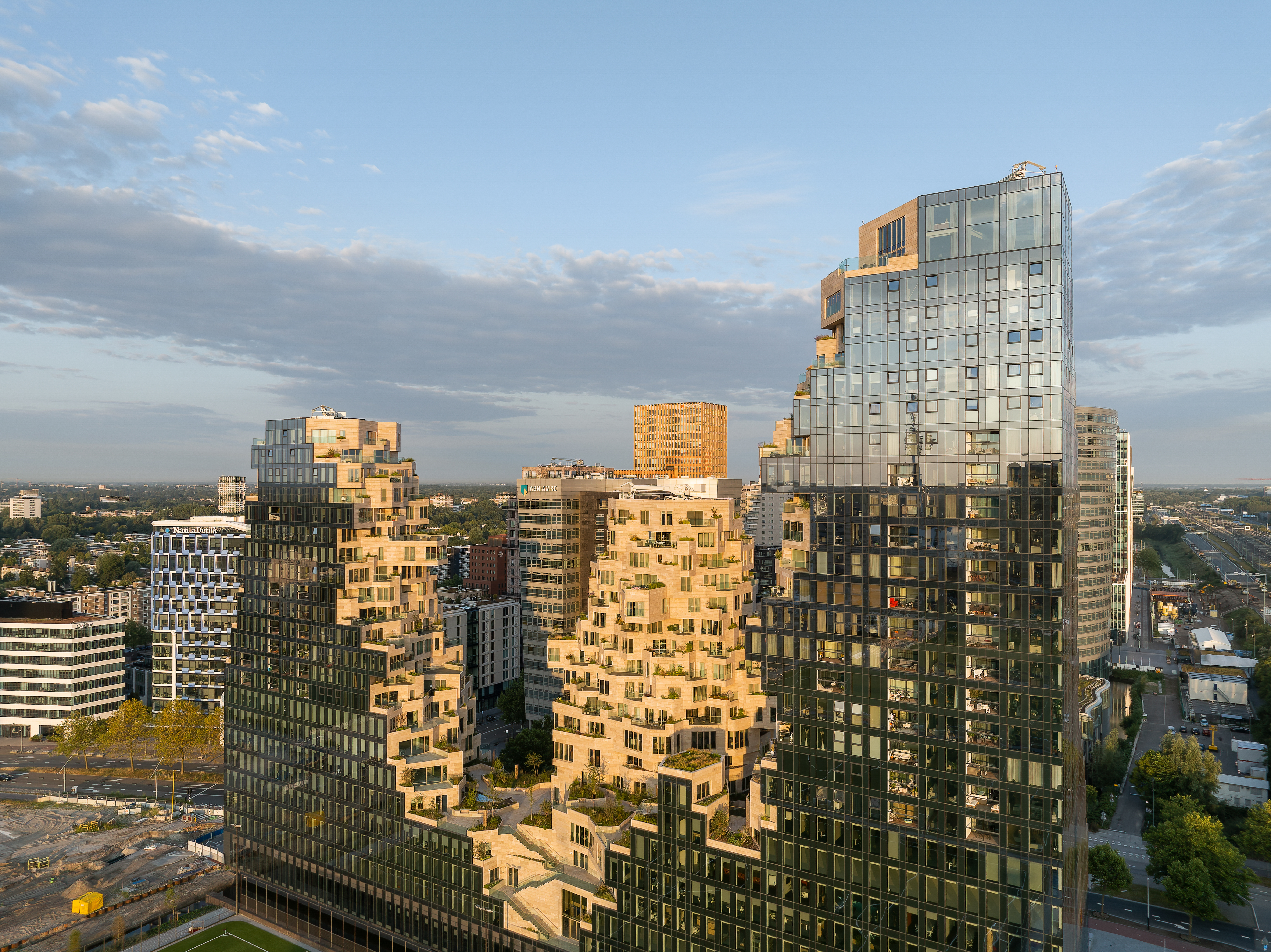
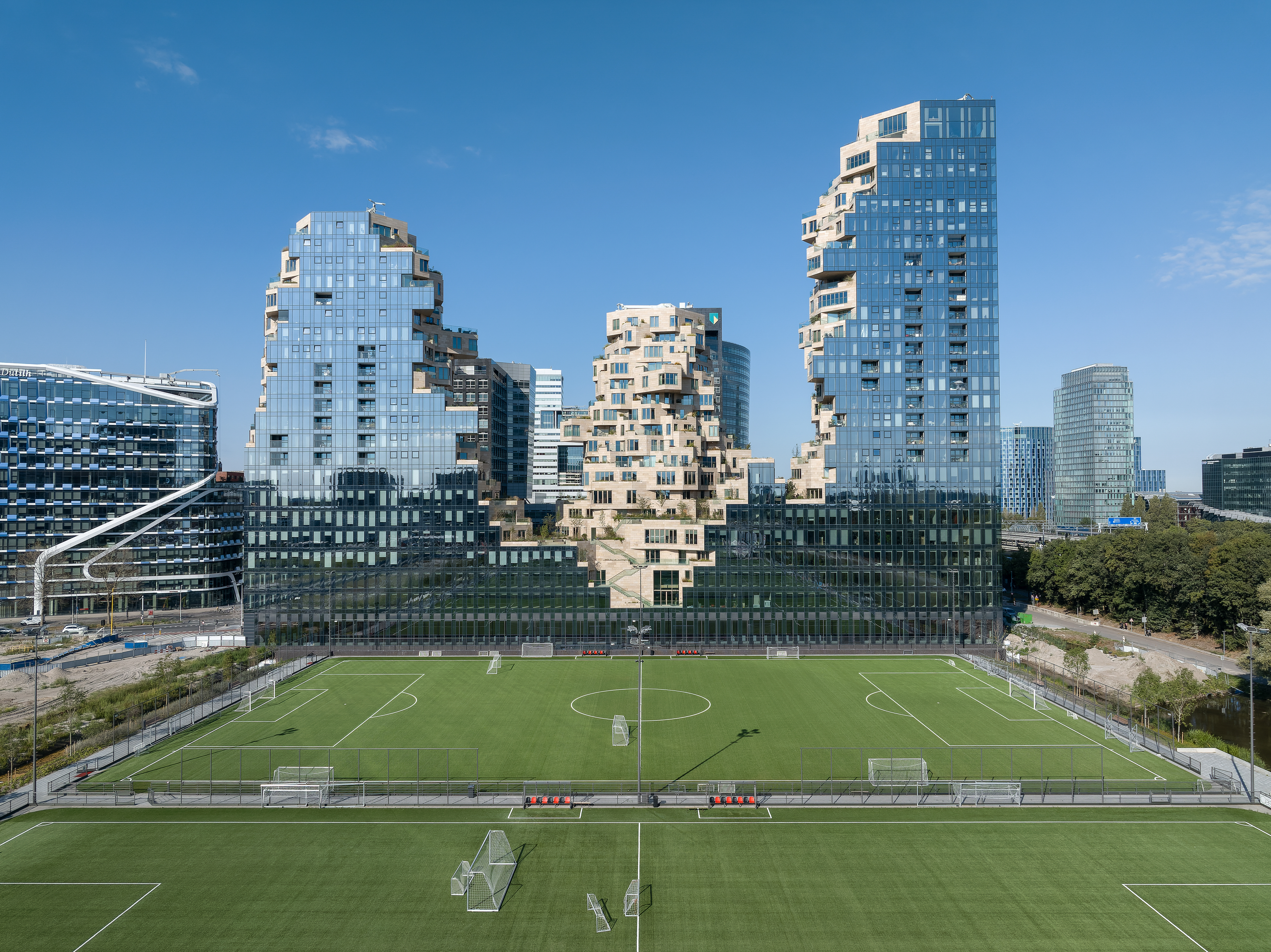
With the Valley Amsterdam project, a striking building complex was created in Amsterdam’s Zuidas business district, designed by the Dutch architecture firm MVRDV for the developer EDGE. The ensemble covers approximately 75,000 m² of usable space and combines residential units, offices, dining establishments, and publicly accessible areas into a multi-layered urban structure.
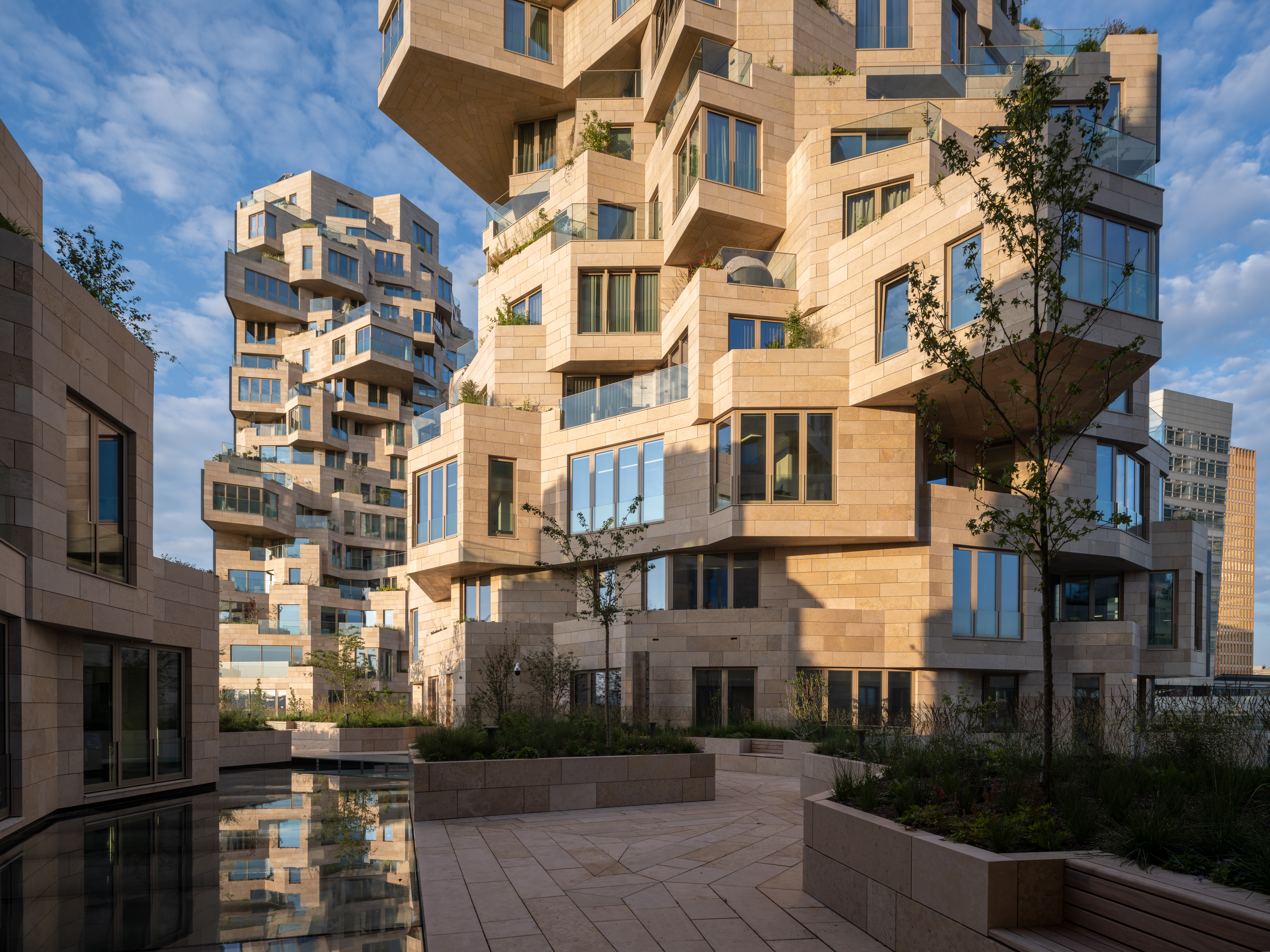
From the outside, the buildings integrate into the high-rise landscape of the office district with a smooth, reflective glass façade. Inside the three interconnected towers, a significantly more natural effect is created: terraced natural stone surfaces, green façades, and vertical gardens form the eponymous “Valley” landscape.
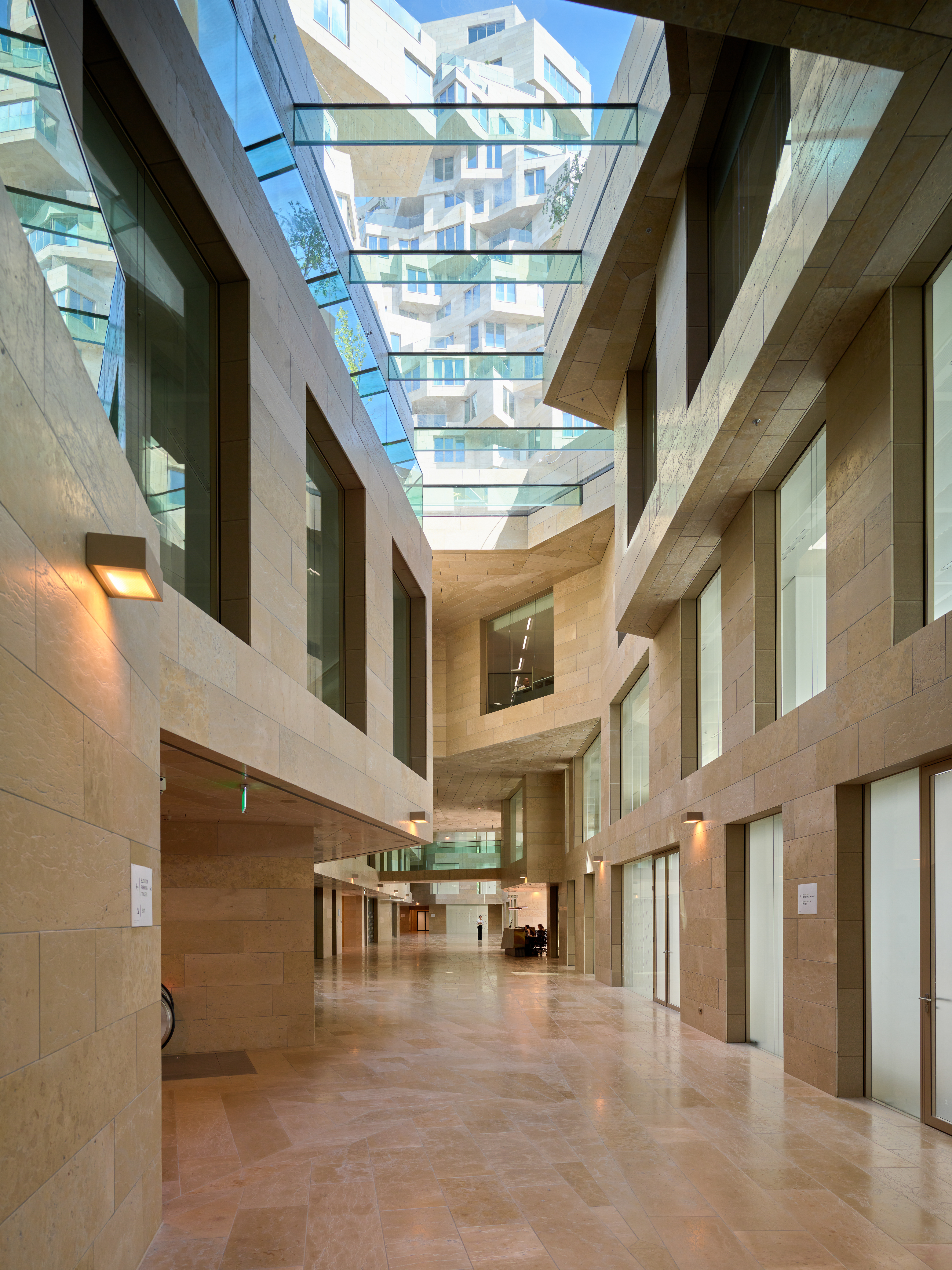
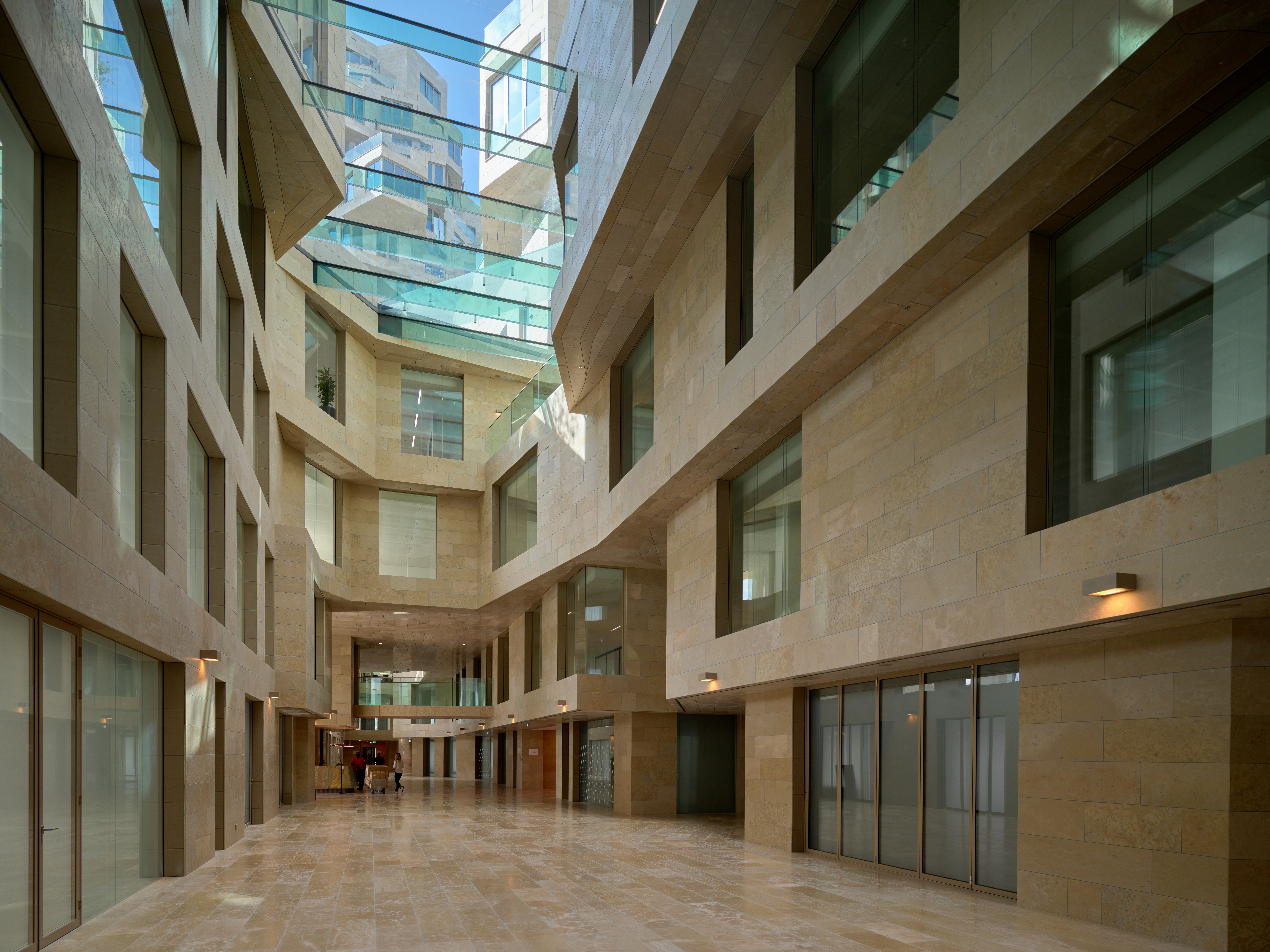
The uses are clearly organised. Above a three-storey underground car park, the first seven floors contain office spaces, with residential units starting above. Several areas are publicly accessible, including a pedestrian path rising from the street, the central interior area, and the “Grotto,” a covered passage on the first floor. Generous views over the city are provided both from the apartments and from the Skybar in the tallest tower.
The project combines architectural design with a comprehensive sustainability approach. The building consumes around 30 % less energy than legally required, emphasising the efficient and sustainable planning of the complex.
The office spaces were certified according to the Dutch sustainability standard BREEAM-NL Excellent. For the residential areas, the building achieved 8 out of 10 points in the GPR Gebouw assessment system. This evaluates, among other things, energy consumption, environmental impacts, health, usability, and future viability.
Vertical gardens, green terraces, and natural stone surfaces further shape the spatial concept. Integrated green spaces create additional amenity areas within the building and strengthen the connection to the surrounding city.
In the office spaces on the lower floors, an environment was created that is oriented towards flexible ways of working and adaptable building use. The Lindner Group supplied approximately 9,300 m² of the NORTEC raised floor system for this purpose. Installation was carried out by the Dutch project partner WURKS.
The cavity beneath the floor level allows structured and always accessible routing of installations such as data cabling, power supply, or building services. This ensures that the technical infrastructure remains flexible and easy to maintain even during future adjustments to the space layout.
The raised floor panels have high building-physical and structural properties and are designed for a wide range of applications in modern office fit-outs. Optionally equipped with an underside steel sheet laminate, they provide a robust construction with stable load distribution. A surrounding edge protection additionally protects the panels from mechanical impacts and moisture.
In addition to functional requirements, material ecology also played a role in selecting the floor system. The floor panels contain up to 100 % recycled content. Moreover, the system is non-combustible and has good acoustic properties.
The raised floor system is Cradle to Cradle Certified® Silver and can be returned to the material cycle at the end of its service life as part of a take-back scheme. This supports resource-efficient building use in line with circular material concepts.
Project: The Valley Amsterdam
Building Type: Residential building
Address: Beethovenstraat 301
Zip/City: 787 Amsterdam
Country: Netherlands
Completion: 2022
Company: Lindner SE I Interior Product Supply
Building Certification: BREEAM
Architect: MVRDV Architects
Partner: WURKS
Floors
Calcium Sulphate Panels