Favorites0 items in wishlist
The Lindner Group is overseeing the comprehensive transformation of the Klett Campus at Stuttgart Feuersee, the partially heritage-protected headquarters of the Klett Group. The Klett Group is a leading education company in Europe, which includes, among others, the Ernst Klett Verlag. The goal is to preserve the historical building fabric while creating a modern, future-ready campus with contemporary work and communication spaces that meet the high standards of this internationally active education company. Construction is scheduled for completion by the beginning of 2027, following the latest standards in energy efficiency, comfort, and safety. The transformation of the Klett Campus is also part of the International Building Exhibition IBA’27 in the Stuttgart metropolitan region.
To successfully meet the project’s complex requirements, Integrated Project Delivery (IPD) combined with a multi-party agreement is being employed. The Klett Campus is the first existing building project in Germany executed using this IPD approach. Unlike traditional tendering, services are not individually contracted but coordinated through a cooperative selection and contract model. This minimizes risks, increases planning reliability, and ensures smooth project progress, even in multi-stage construction and complex modernizations. The collaborative approach fosters a strong partnership between the Lindner Group, the Gottlob-Rommel-Gruppe, BFM Architekten and pbs Ingenieure.
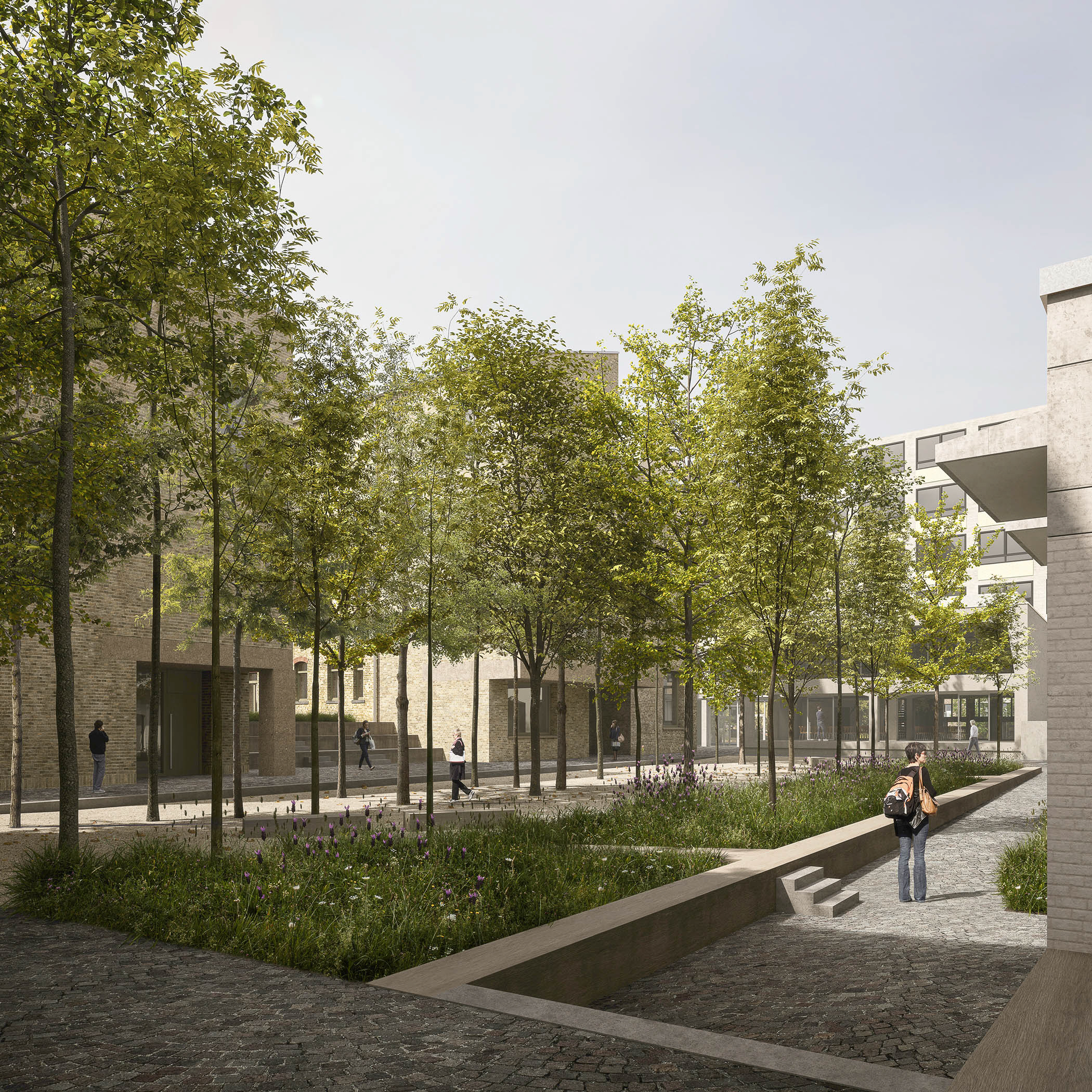
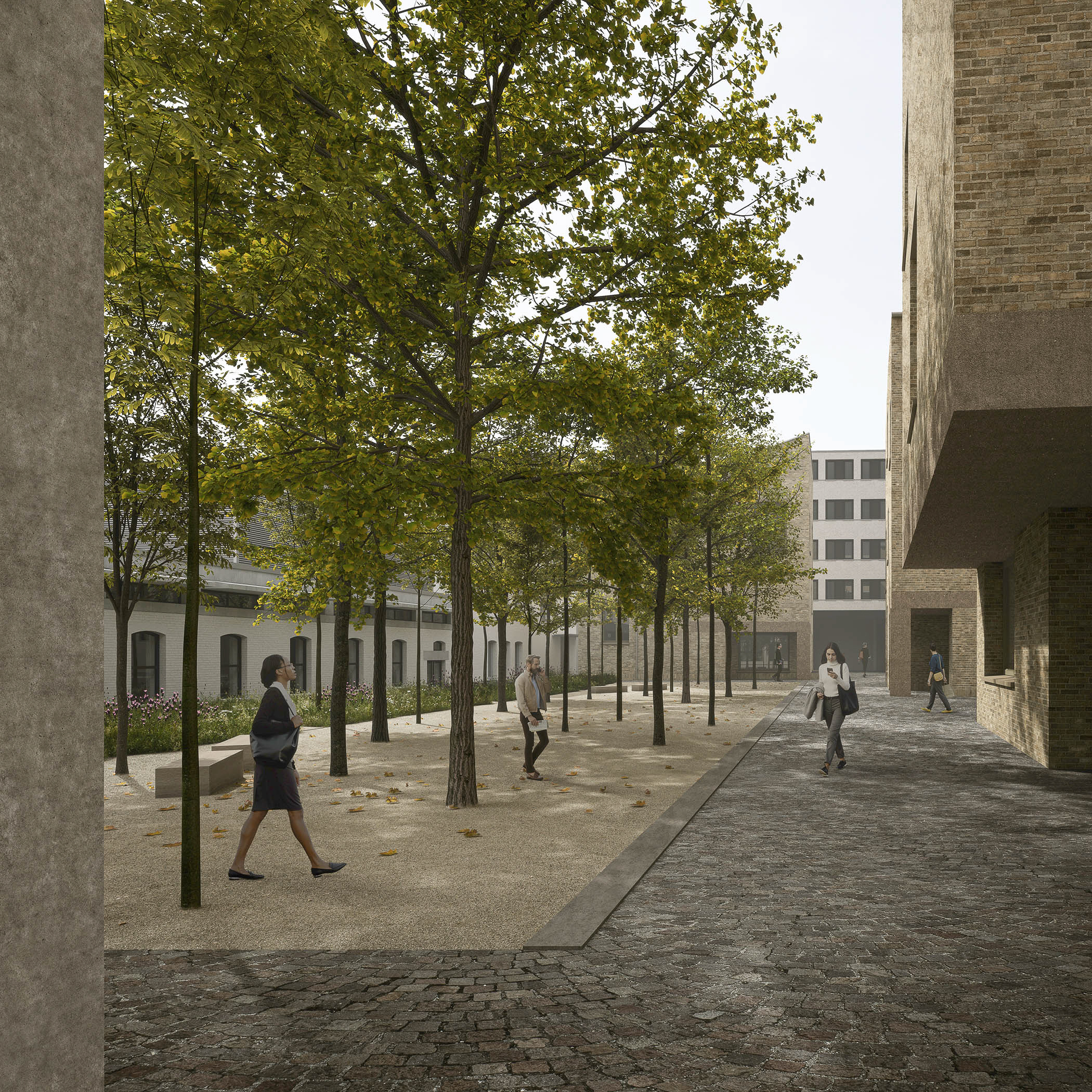
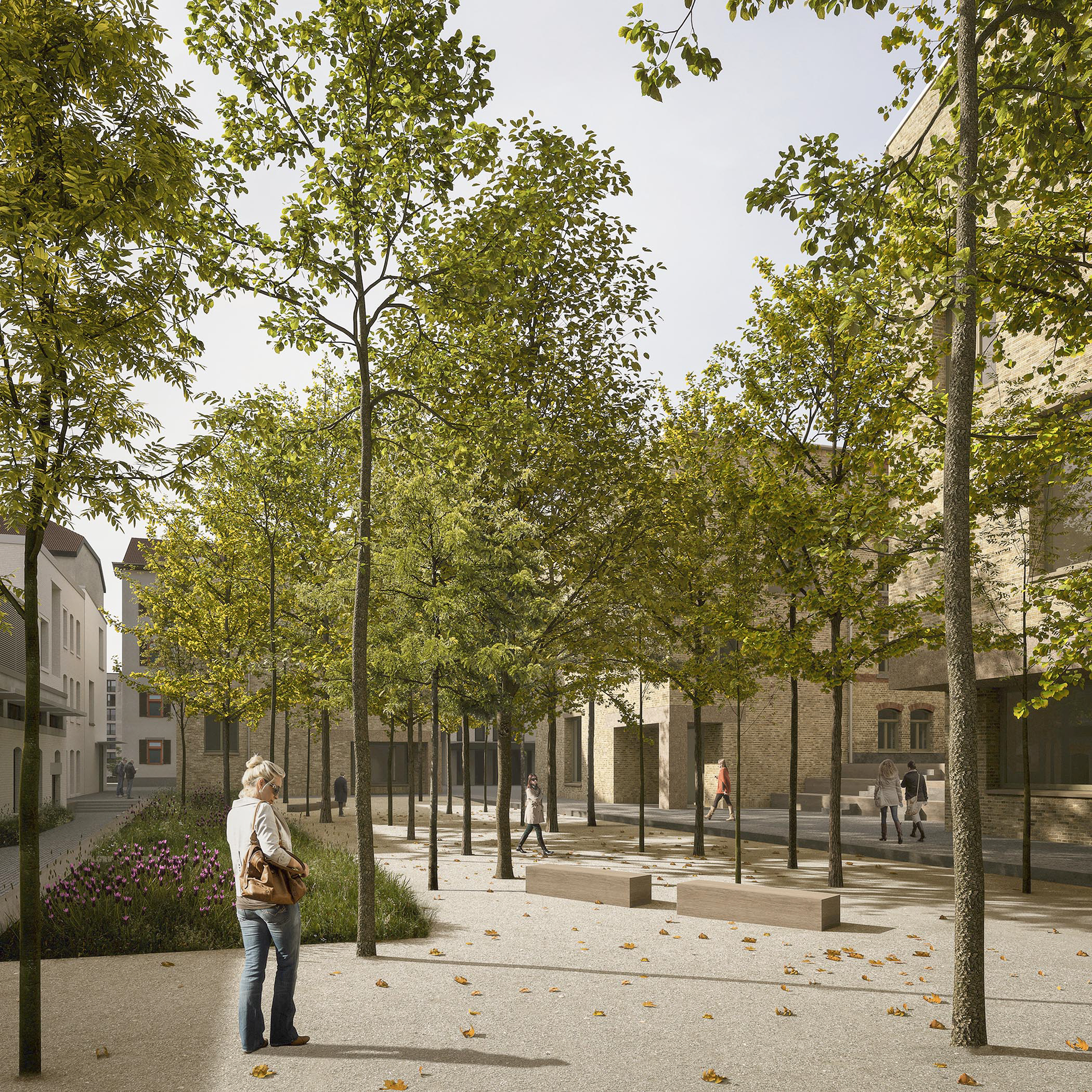
The Klett Campus stands out for its commitment to sustainable construction. Hemp-lime blocks are used for interior insulation and partition walls, while reclaimed bricks are used in extensions. According to EN 15804 calculations, hemp blocks can store CO₂ within the material due to their biogenic carbon content. After use, hemp-lime blocks can be shredded and composted. All buildings are designed for energy efficiency, utilizing low-tech solutions and renewable energy via photovoltaics. Urban open spaces are also ecologically designed: existing surfaces are de-sealed, and over 60 new trees will improve thermal resilience and contribute to local climate change adaptation. In addition, heat pump radiators are installed, which can be used for both heating and cooling. They operate very energy efficiently as they run with low supply temperatures and can also provide cooling by reversing the system cycle.
At the northeast facade, existing insulated glass is replaced with high-performance double glazing, while the northwest facade receives modern triple glazing. Existing sealing systems are carefully dismantled, cleaned, and precisely reinstalled. Approximately 160 linear meters of parapets will be energetically upgraded and fitted with cladding made of multi-folded, powder-coated aluminum insulation panels to improve thermal performance and durability. This approach seamlessly combines heritage preservation with modern architecture and functionality.
In parallel with facade renovation, the Lindner Group is executing the building services and complete interior fit-out. MEP systems – heating, ventilation, sanitation, cooling, and building automation – are implemented according to energy-efficient low-tech principles. Collaboration with Transsolar ensures optimal integration of sustainable technologies. In office and commercial spaces, Lindner executes flooring works and hemp-lime works, painting, lighting solutions, custom doors, and furniture. In technical rooms, recycled LOOP prime raised floors are used, achieving a 72.2% CO₂ reduction compared to equivalent new products.
The Lindner Group leverages its own Metronom construction planning software for scheduling and workflow management. All trades – from structural works, facade renovations, and interior fit-out to building services – are centrally coordinated and continuously updated. The construction follows Lean Construction Management principles: in short, regular planning sessions, project participants align tasks, define work packages, and organize execution in a synchronized rhythm.
This structured planning allows for continuous workflow optimization. Close team collaboration identifies dependencies early, enables precise process control, and allows adjustments to unforeseen events. Updates can be immediately integrated into Metronom, providing transparency on project progress and ensuring efficient execution.
The project is currently in an advanced planning and execution phase. Detailed planning for facade and energy renovation, as well as the integration of building services, is largely complete, and initial interior fit-out works have commenced. Simultaneously, continuous coordination under Lean Construction Management and regular updates in Metronom guide construction progress, preparing subsequent phases for smooth and precise implementation.
Project: Transformation of the Klett Campus at Stuttgart Feuersee – Heritage Meets Modern Workplace
Building Type: Office Buildings
Address: Rotebühlstraße 77
Zip/City: 701178 Stuttgart
Country: Germany
Completion: from 2025 to 2027
Company: Lindner SE | Fit-Out South.Southwest Germany, Lindner SE | Building services engineering, Lindner SE | Partitions, Lindner SE | Interior Fit-Out and Furnishings, Lindner Building Envelope GmbH, Lindner SE | Luminaires
General Contracting
Painting works
Furniture
Screed works
Plastering works
Dry construction works
Building services insulation
Floor covering works
Tiling works
Building services engineering
Heating system
Ventilation systems
Sanitary systems
Cooling
Measurement, control and regulation technology
Floors
Refurbished Calcium Sulphate Panels
Partitions
Partition Systems Full Panel
Partition Systems Glass
Ceilings
Facades
Luminaires
Lean Construction Management
Klett-Haus Stuttgart Grundstücksgesellschaft mbH
Bruno Fioretti Marquez
pbs Ingenieure GmbH
Gottlob Rommel Gruppe
Yukon Projects GmbH