Favorites0 items in wishlist
One for All: As BitHeat the Lindner Group presents a modular, decentralised and energy-efficient edge-cloud solution that integrates seamlessly with existing building services and IT infrastructure. BitHeat strengthens digital sovereignty, minimises transmission losses, and simultaneously enables sustainable heat and energy recovery.
Global data traffic continues to grow relentlessly, and conventional data centres are increasingly reaching their physical limits. Issues such as data ownership and security are also becoming critical, with the US Cloud Act in stark contrast to the strict European General Data Protection Regulation (GDPR). The fragmentation of cloud infrastructure further exacerbates this challenge.
Against this backdrop, the EU launched the 8ra project as part of IPCEI‑CIS (Important Project of Common European Interest – Cloud Infrastructure & Services). The initiative provides a holistic concept designed to address, in parallel, the previously separate issues of data centre and cloud architecture.
Firstly, the physical infrastructure is decentralised. Rather than huge, monolithic installations, a cloud-edge continuum emerges from smaller, geographically distributed locations. These can be integrated into existing buildings, reducing the distance between data and end users. The result is a noticeable decrease in transmission losses and latency. Secondly, the cloud itself is decentralised: by distributing computing and storage capacities exclusively within Europe, dependency on US providers is reduced, and digital sovereignty is strengthened.
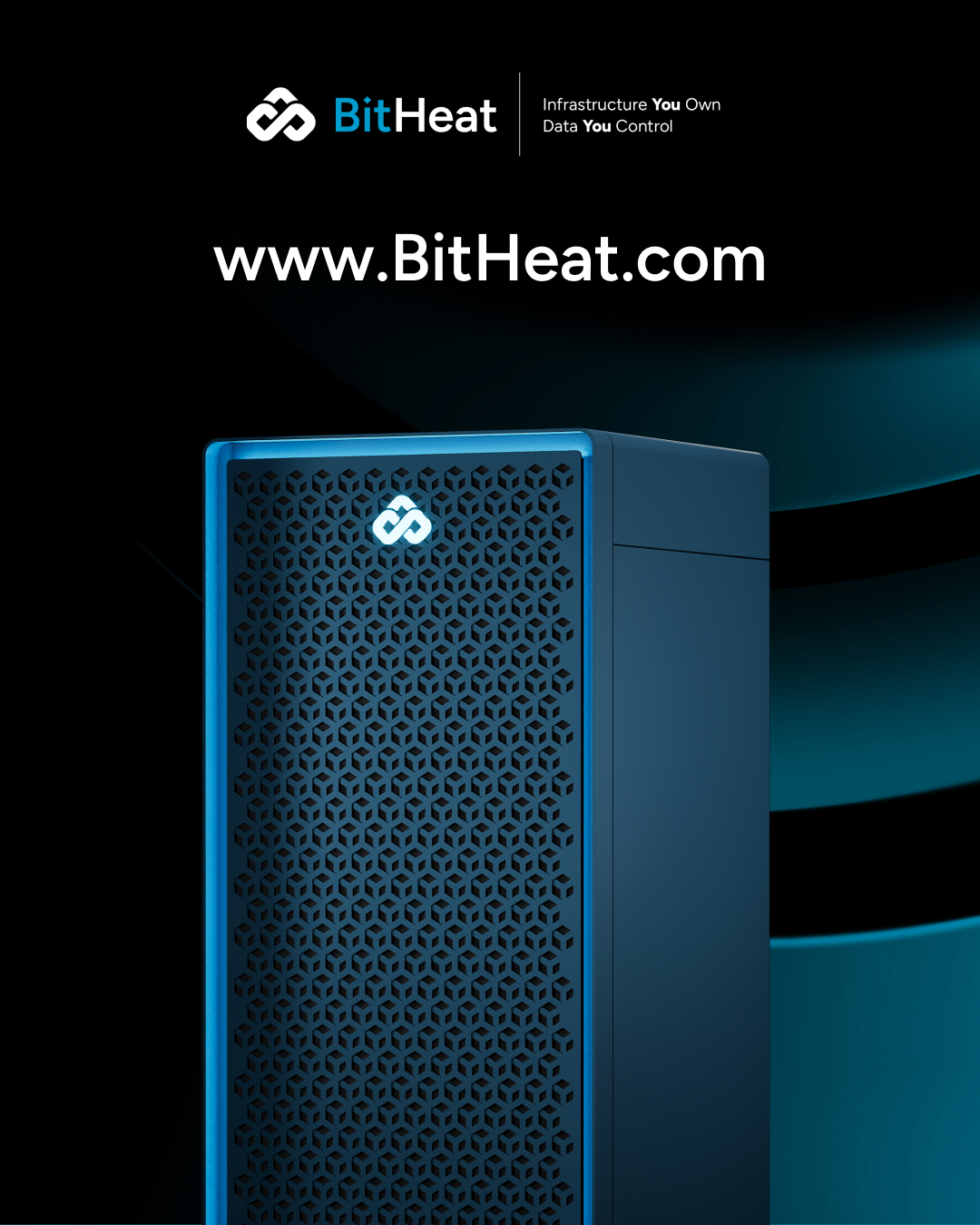
The Lindner Group – primarily known as a full-service provider of high-quality interior fit-outs, building insulation, building services and building envelopes – participates in the 8ra initiative under the project name BiGreen (Building Integrated GREen Edge cloud Native). Within this framework, the Lindner Group is developing BitHeat, an edge cloud computing module that fully integrates computing power, building services and IT security in a compact, modular unit.
The first version, BitHeat Model One, is designed as a compact plug‑and‑play device (approx. 610 × 624 × 1,220 mm) with a capacity of up to 3 kW. The module can be installed anywhere that allows connection to an existing heating system.
The module primarily uses electricity generated from on-site renewable sources. The generated electrical energy is “refined” directly on site: it provides computing power while simultaneously producing heat, which is captured in a closed loop. Decentralised generation eliminates transport and transformation losses, reducing the load on the public grid and lowering associated CO₂ emissions.
A distinctive feature of the module is that it requires no separate cooling unit. The servers are immersed in a non-conductive cooling oil (immersion cooling). The oil remains in a closed system, eliminating the need for additional water or refrigerant flows. This method cools chips more efficiently than conventional air cooling. The sealed system also prevents dust and dirt ingress, extending the hardware lifespan to approximately six to eight years.
The waste heat is made available via a heat exchanger for building-relevant applications such as space heating and hot water, and can also be used for industrial process heat. Designed as a supplementary heating system, it is compatible with all types of heating technology, including heat pumps, district heating and gas systems. The building is primarily heated by the BitHeat module, with the existing system covering peak demand.
Ahead of the planned market launch in 2027, several pilot installations were carried out in hotels and modern office buildings as part of an extensive proof-of-concept programme. These tests focused on the module’s compatibility with diverse heating systems. In parallel, comprehensive stress-test scenarios were developed to simulate real-world loads – from constant operation to compute-intensive AI workloads such as CPU-based large language models (LLMs).
Since the module is operated decentralised in buildings rather than in conventional data centres, it is equipped with a physical security system. The first product, BitHeat Model One, is currently undergoing CE certification and meets European safety and environmental standards. The initial target market comprises small and medium-sized enterprises that lindner-redaktiondigitalisierungpressemitteilungwish to operate their own IT infrastructure while benefiting from a decentralised, energy-efficient edge computing solution.
For the brand launch and product innovation, Lindner has launched a dedicated website for BitHeat: www.BitHeat.com
*Disclaimer: BiGreen – Supported by the Federal Ministry for Economic Affairs and Energy pursuant to a resolution of the German Bundestag – Funded by the European Union