Favorites0 items in wishlist
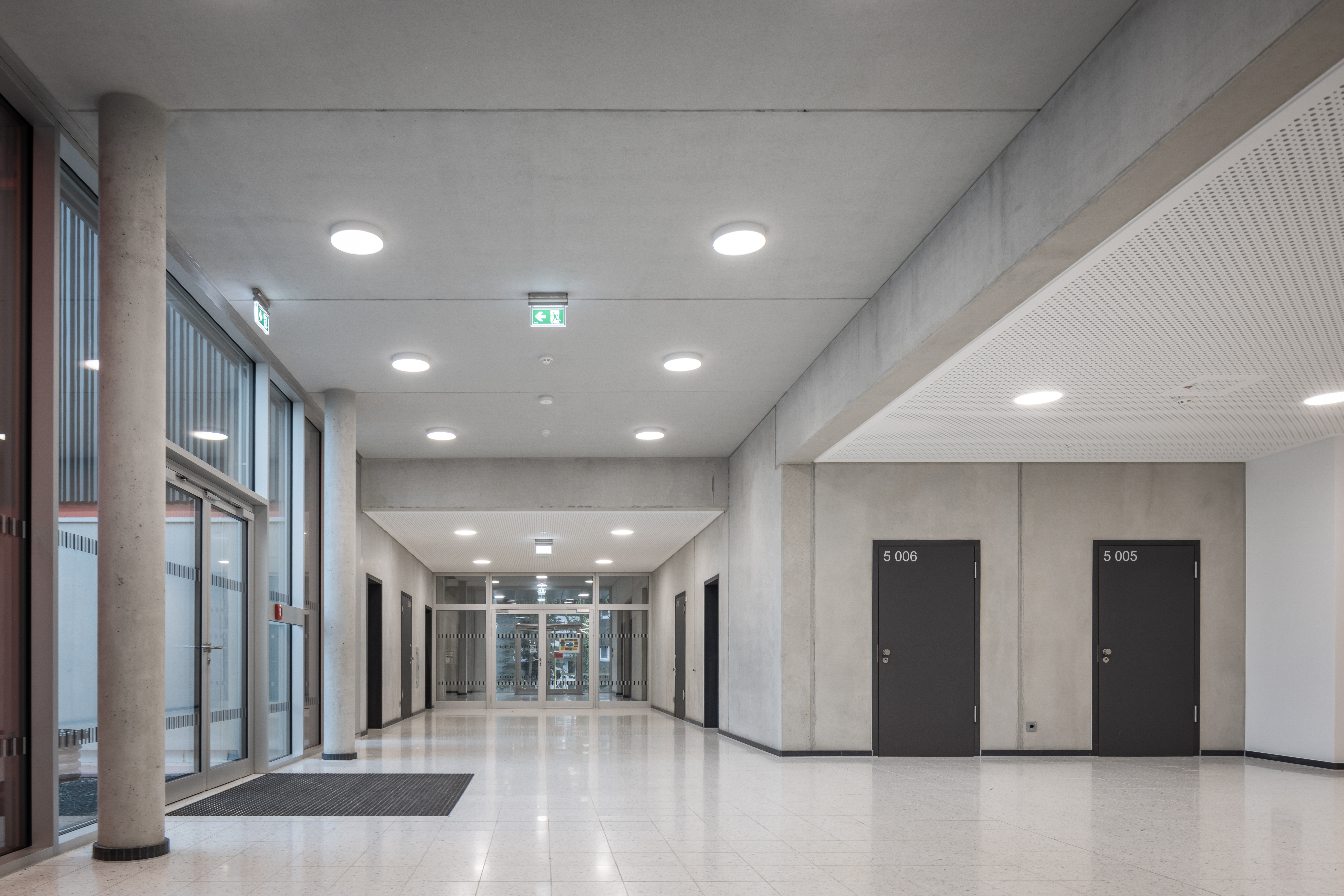
The extension of the Lise Meitner Grammar School resulted in a forward-looking new building that responds to changing pedagogical, organisational and demographic conditions. Despite previous refurbishments of the existing buildings as well as the sports and gym halls, there was a clear shortage of space – particularly due to the reintroduction of the nine-year grammar school programme. At the same time, there was a significant need for modern specialist classrooms, especially for computer science.
The new building extends the school grounds to the south and integrates into the existing ensemble as an independent structure. The main building was retained; only the so-called appendix was demolished. At the same time, the entrance area of the sports hall was reorganised. The new building forms a clear spatial conclusion to the school complex and defines both the starting and end points within the overall site.
Five interconnected learning houses are accessed via a central “boulevard”. Between the buildings, school courtyards and themed gardens provide areas for recreation and movement, integrating outdoor spaces into the educational concept.
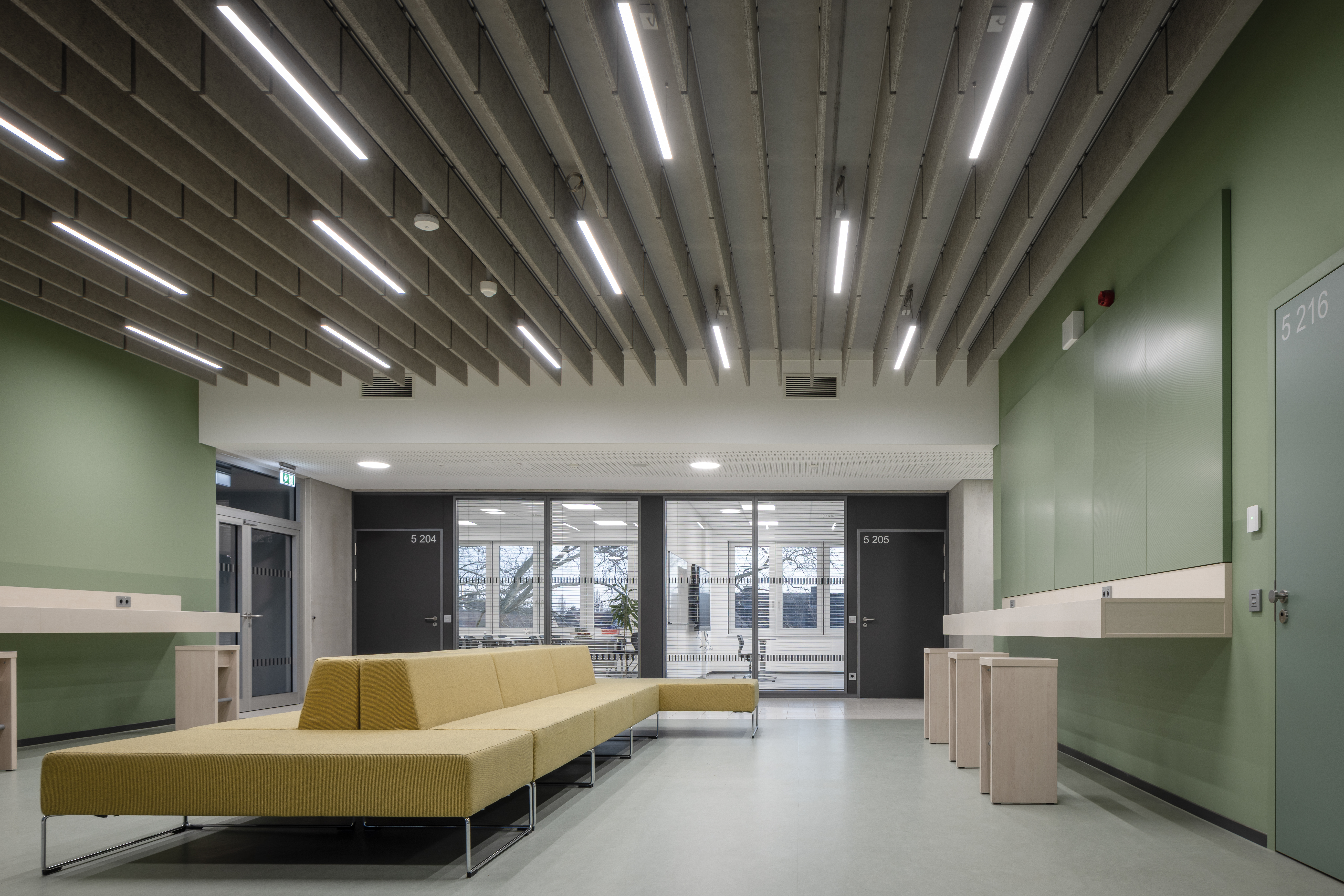
The internal layout of the new building follows the cluster school concept. In contrast to the traditional corridor school, year groups are organised into clearly defined clusters. These clusters function as independent learning units within the overall structure, enabling short distances and clear orientation throughout the building.
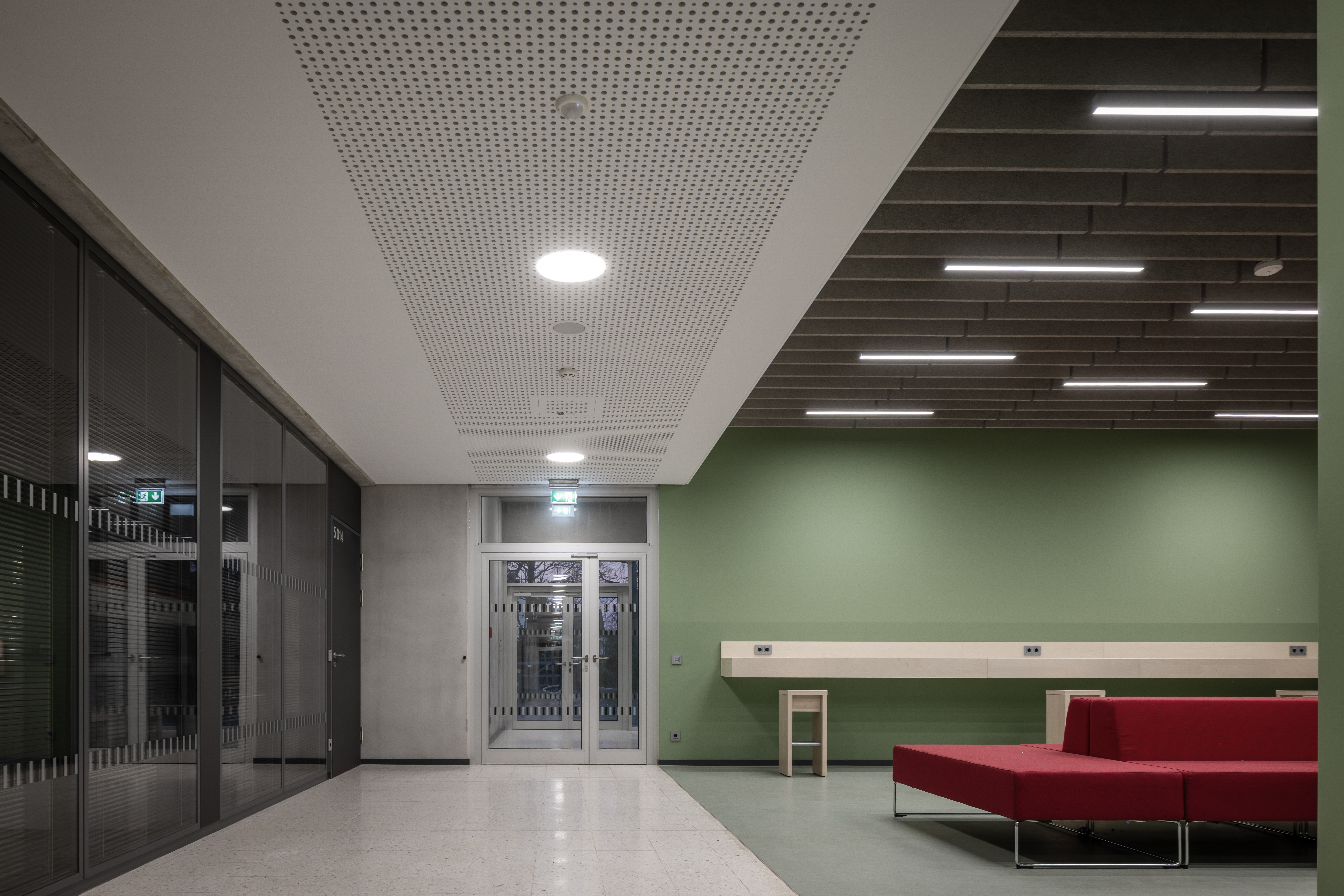
The open learning landscapes combine teaching rooms with differentiation zones, common areas and quiet retreat spaces to form cohesive spatial groups. In total, the new building comprises 18 classrooms, three computer science rooms, three multifunctional rooms and six cluster rooms. Spatial openness encourages communication and collaboration, while targeted zoning allows for retreat and focused work. Transparency, flexibility and acoustic quality were key requirements for both architecture and interior fit-out.
Within the interior fit-out, system solutions were implemented that meet both design and functional requirements. Lindner Group was responsible for key elements of the project, particularly partition walls, door integration and acoustically effective separations. The aim was to realise the open spatial concepts of the cluster school while ensuring the necessary conditions for concentrated learning.
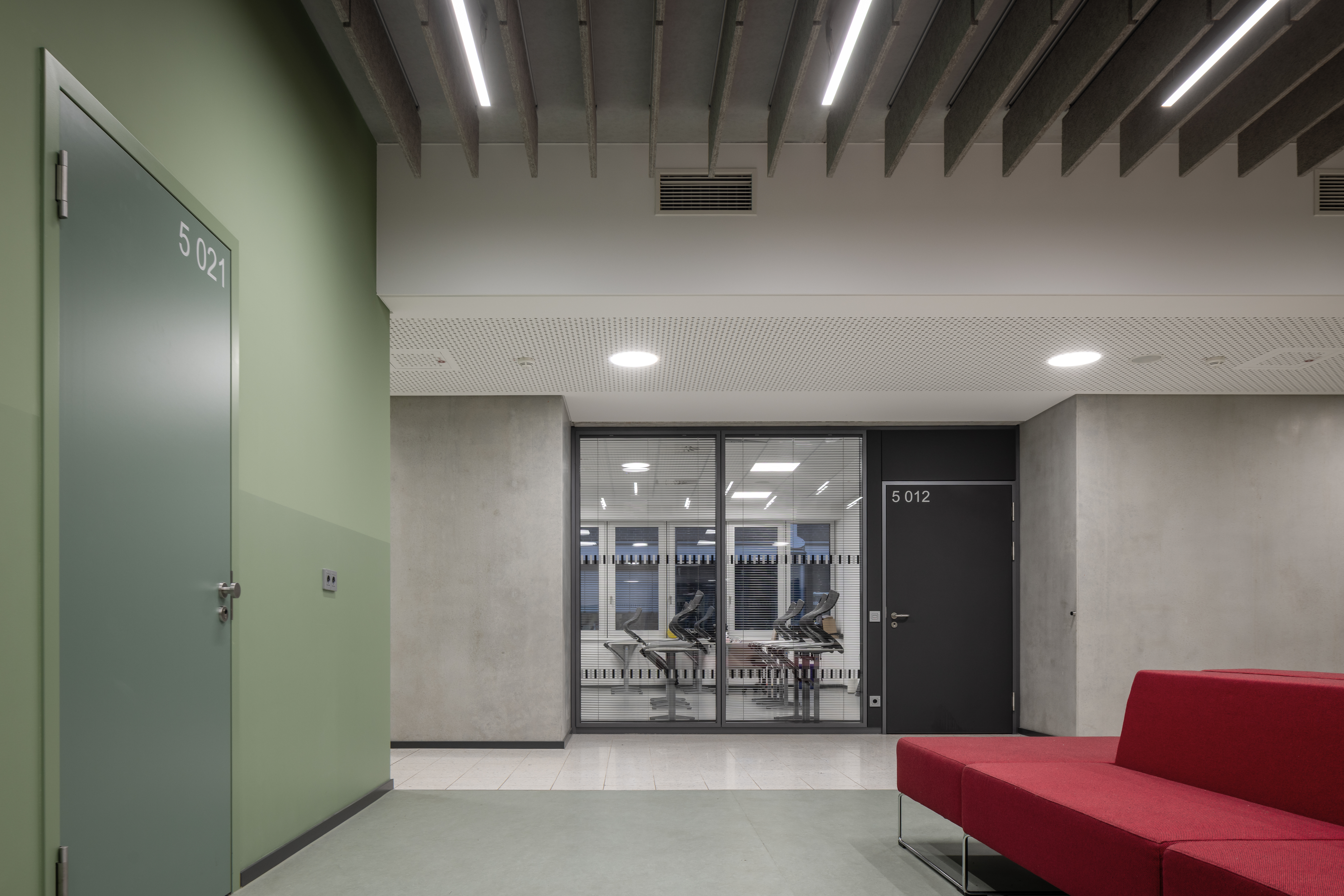
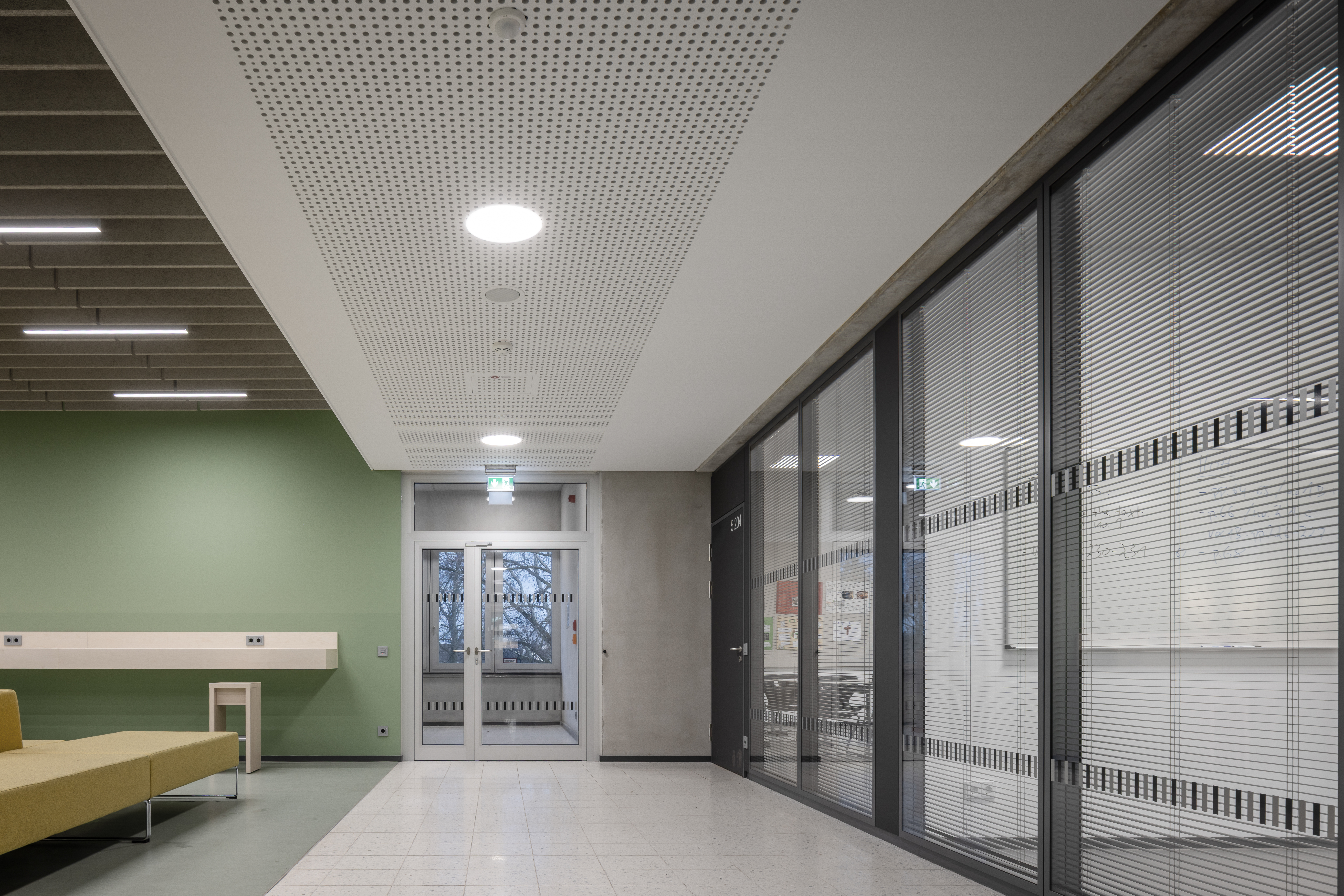
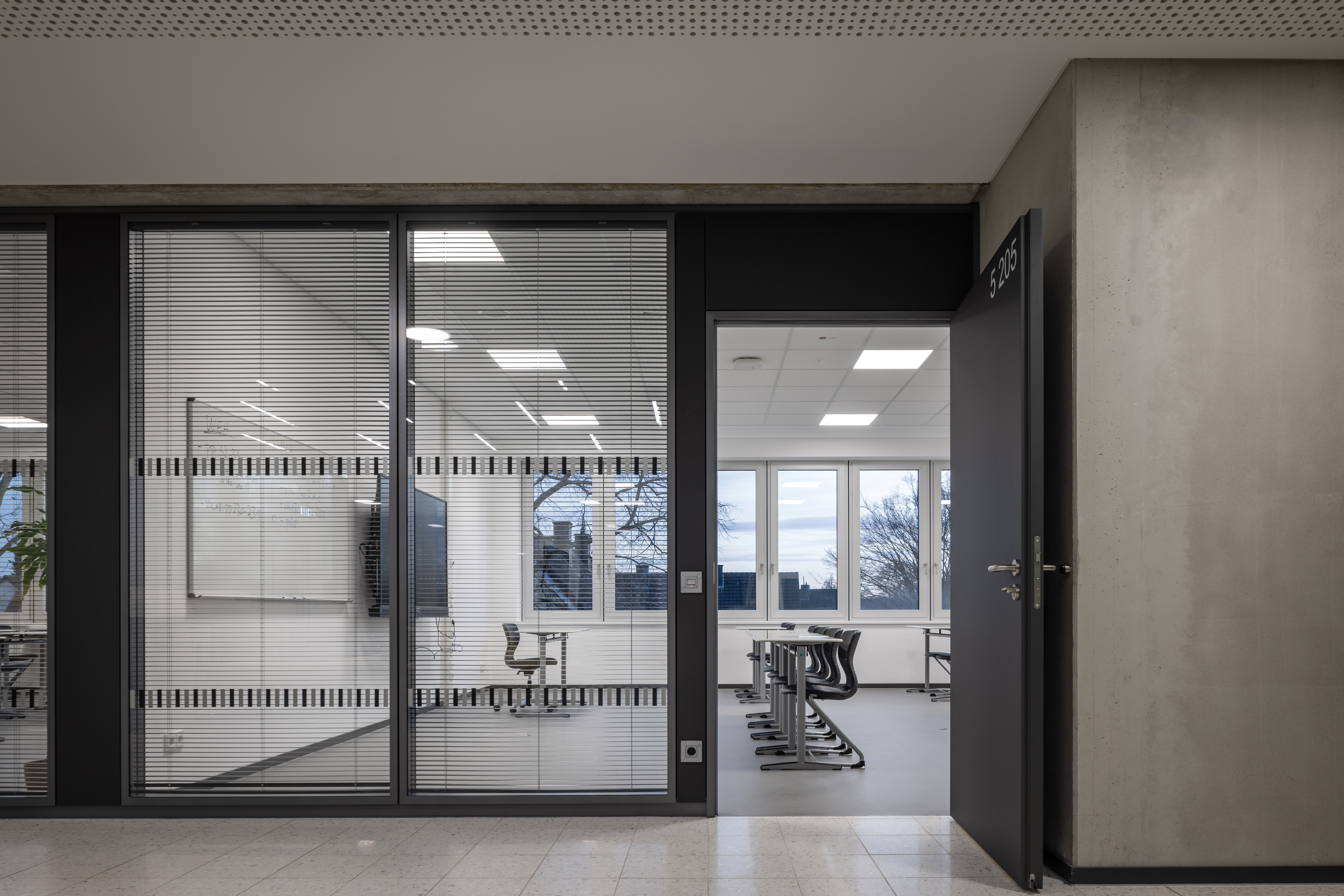
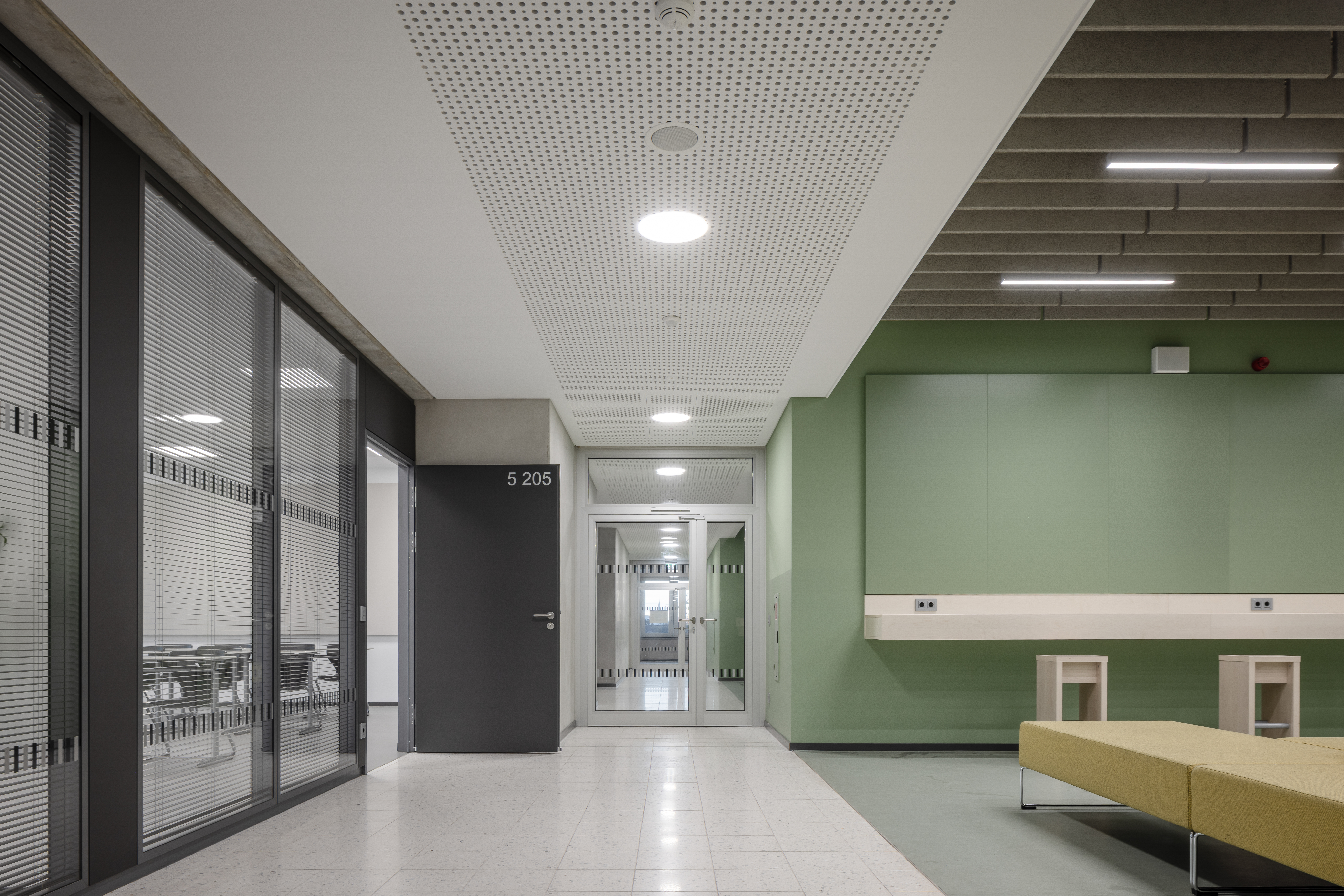
Lindner Life Stereo 125 glass partition walls were used to zone the transitions between corridor and classroom areas. Within the clusters, they provide a high level of visual permeability, promoting transparency and orientation throughout the building, while at the same time offering effective sound insulation between different areas of use.
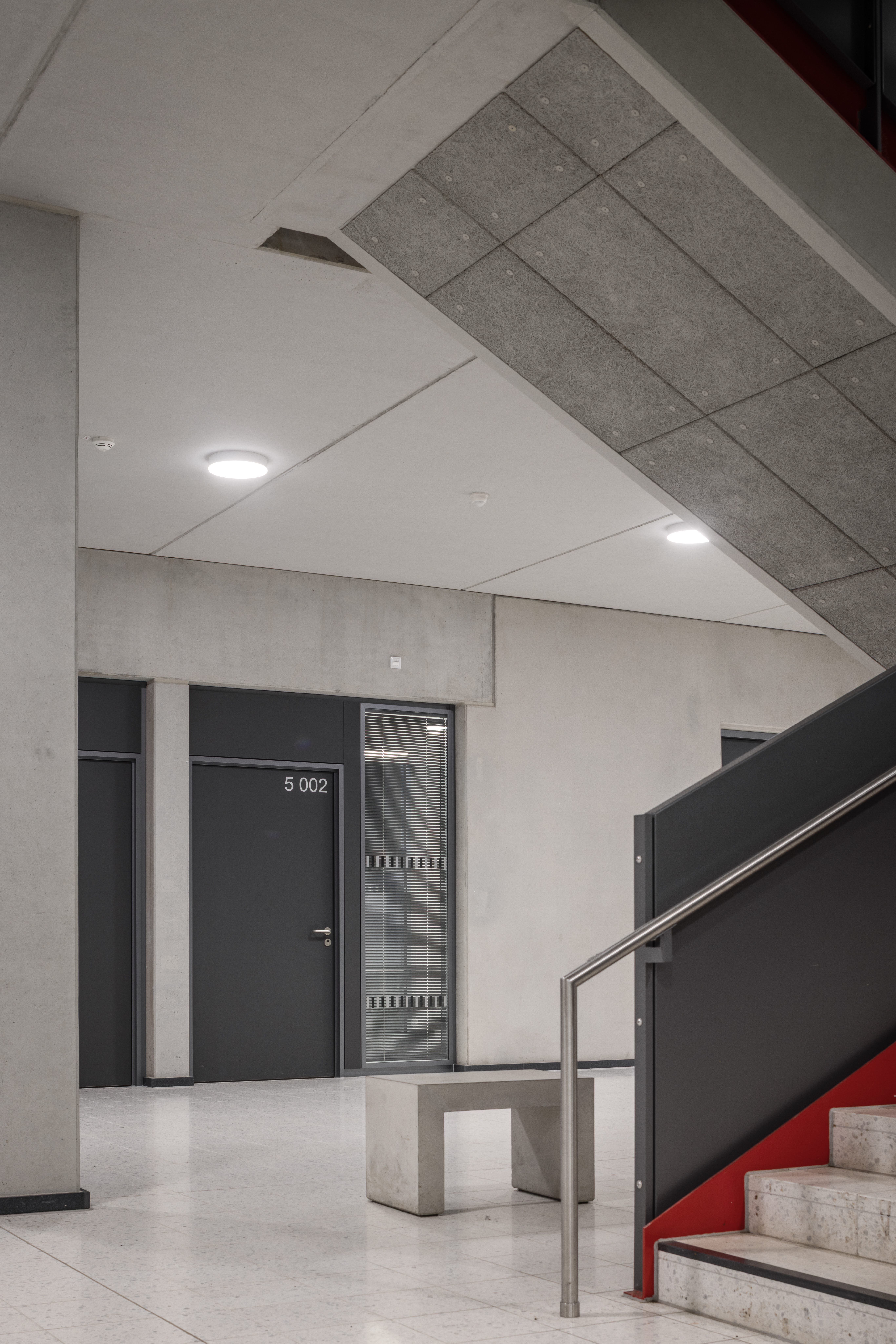
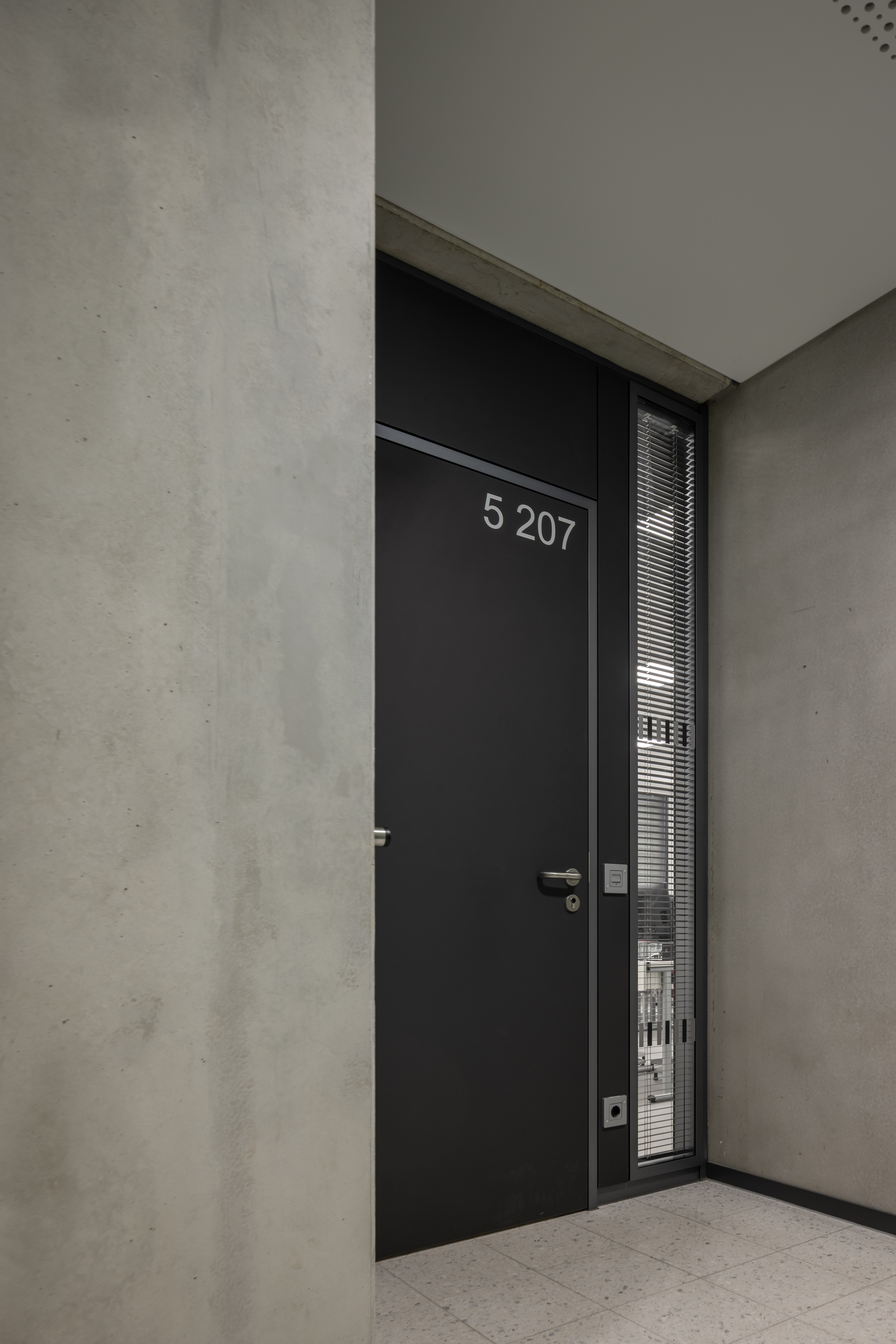
In addition, Lindner Logic 100 Timber timber walls were installed. These meet the functional requirements of school buildings – robustness, suitability for everyday use and clear zoning – while their material quality supports a calm and natural interior atmosphere. Combined with integrated HTB 68 timber doors, this creates a consistent design language of wood and glass that clearly defines the individual spatial groups.
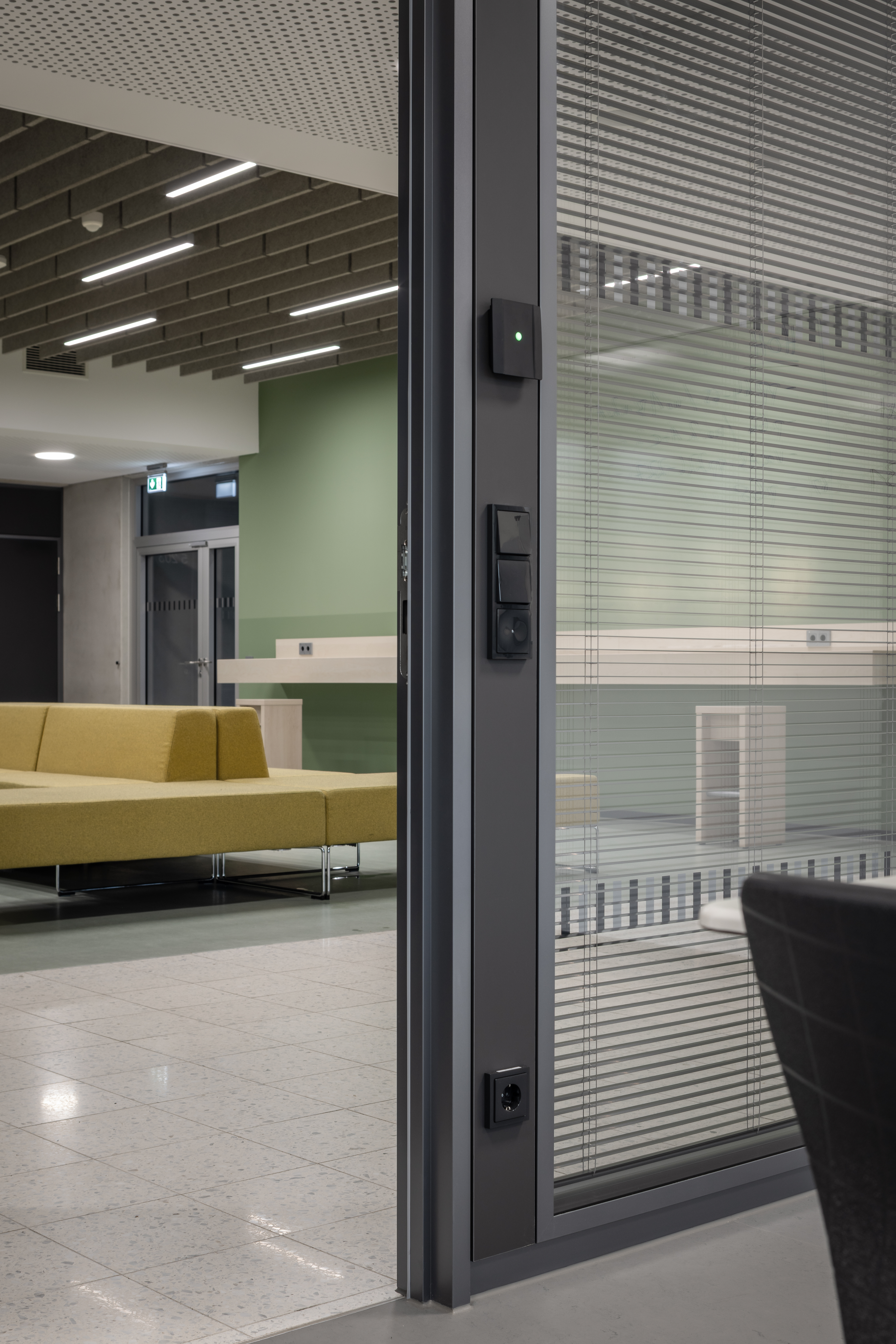
Some of the partitions between corridors and classrooms were fitted with manual or electrically operated blinds. This allows transparency and visual connections to be adjusted as required – for example during examinations, presentations or phases of focused individual work.
Project: Extension of the Lise Meitner Grammar School
Building Type: Schools
Address: Am Stadtpark 50
Zip/City: 51373 Leverkusen
Country: Germany
Completion: 2025
Company: Lindner SE | Partitions
Client: Stadt Leverkusen
Partitions
Partition Systems Glass
Partition Systems Full Panel
Additional Equipment- Lindner Plus
Doors
Wooden doors