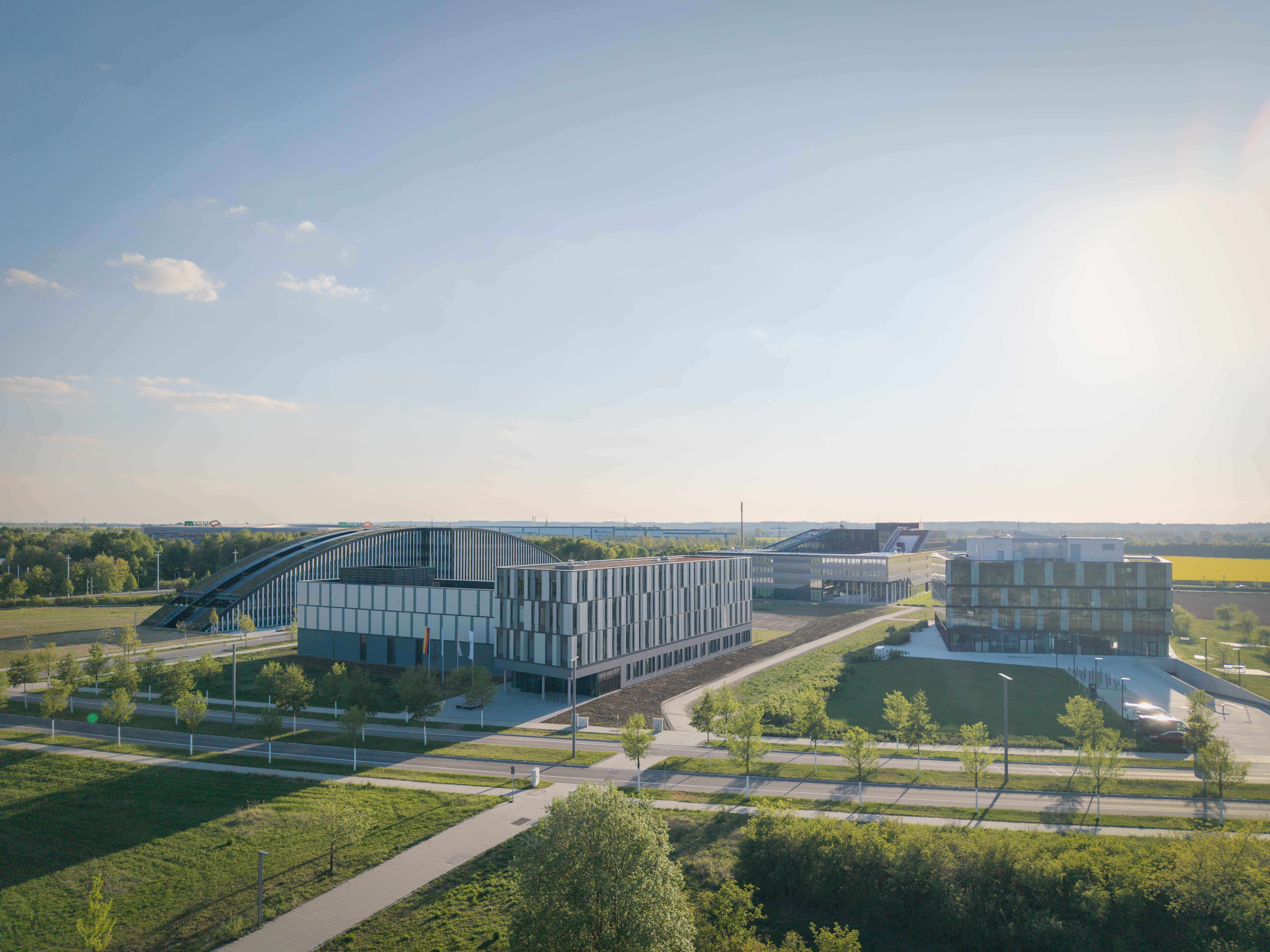
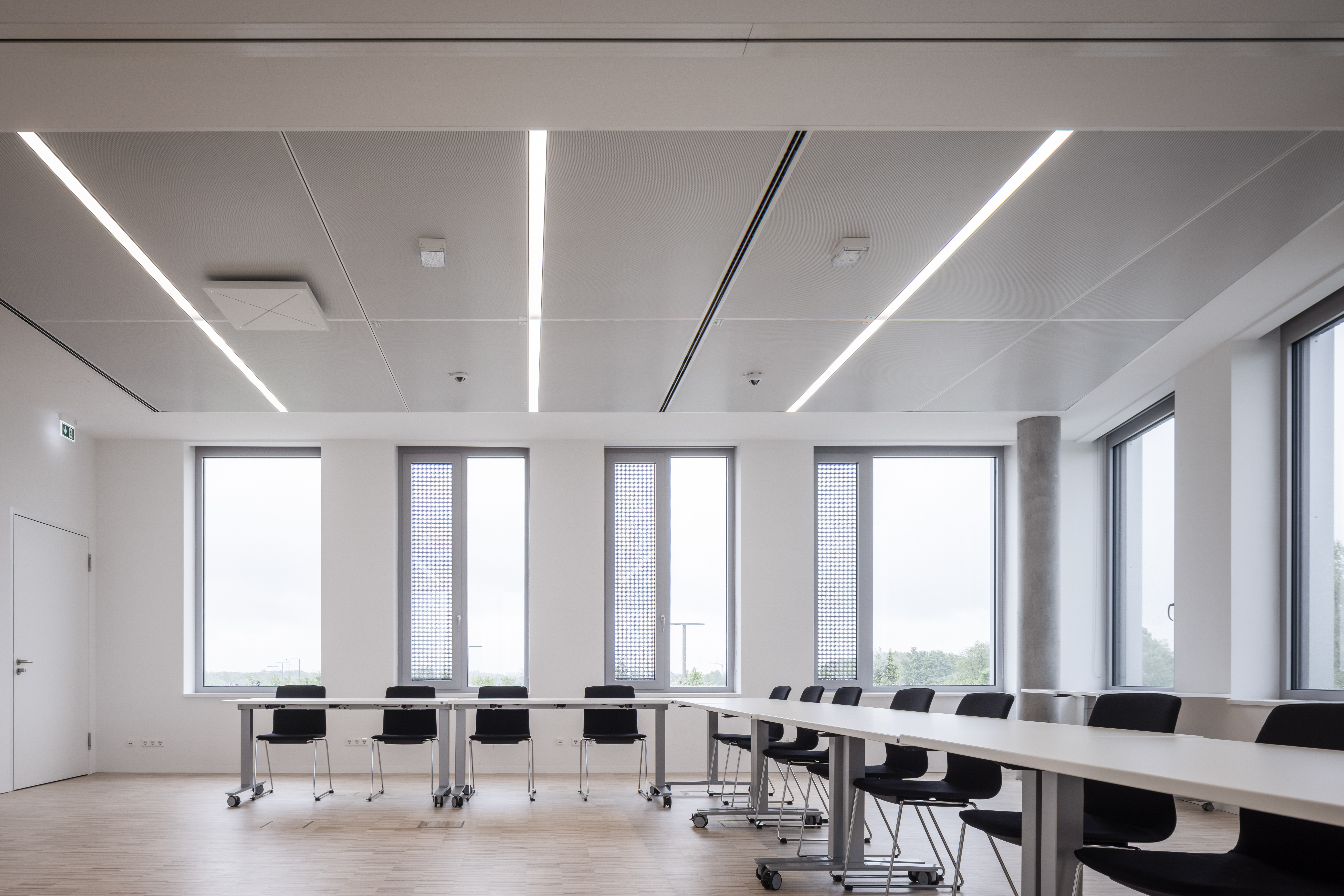
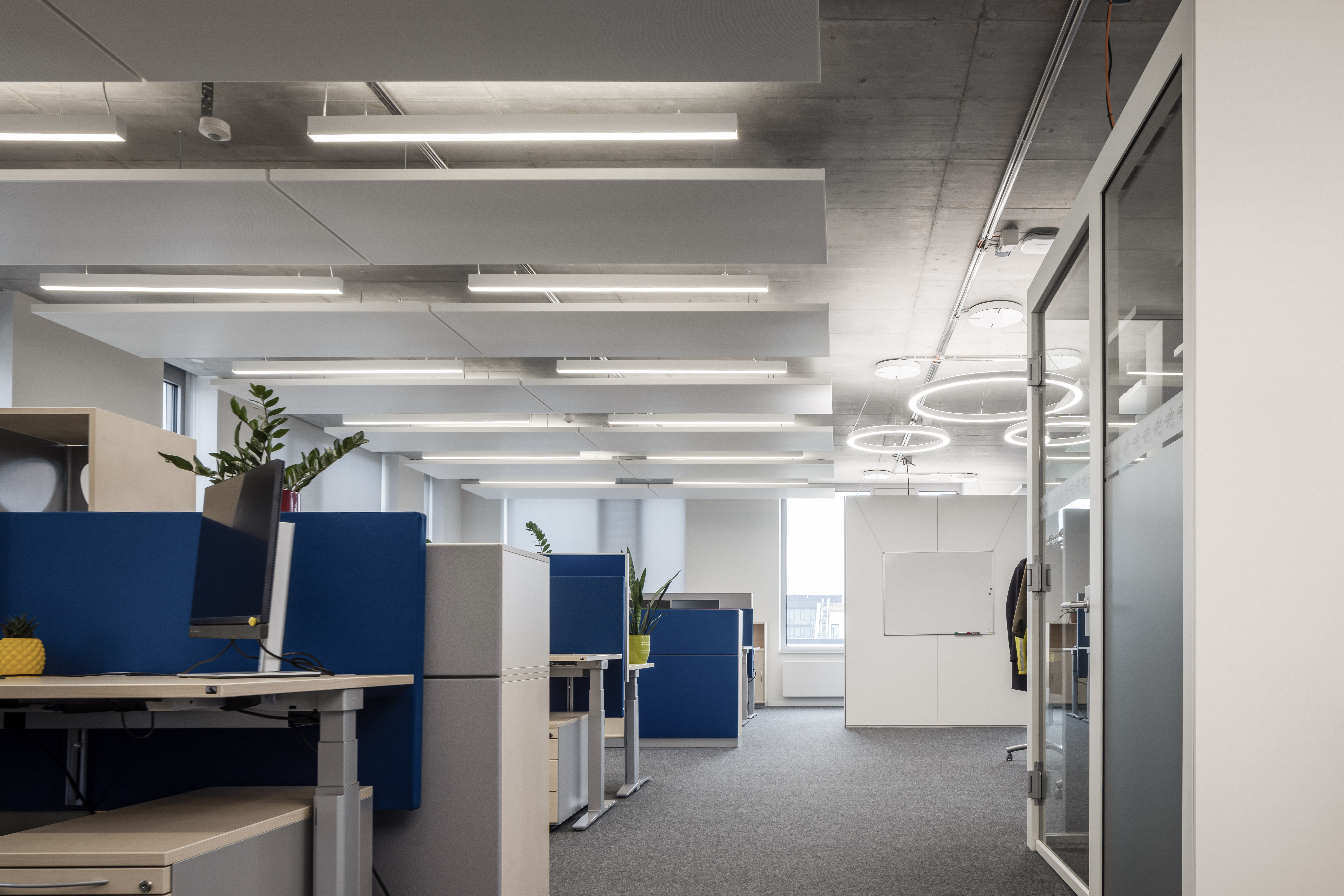
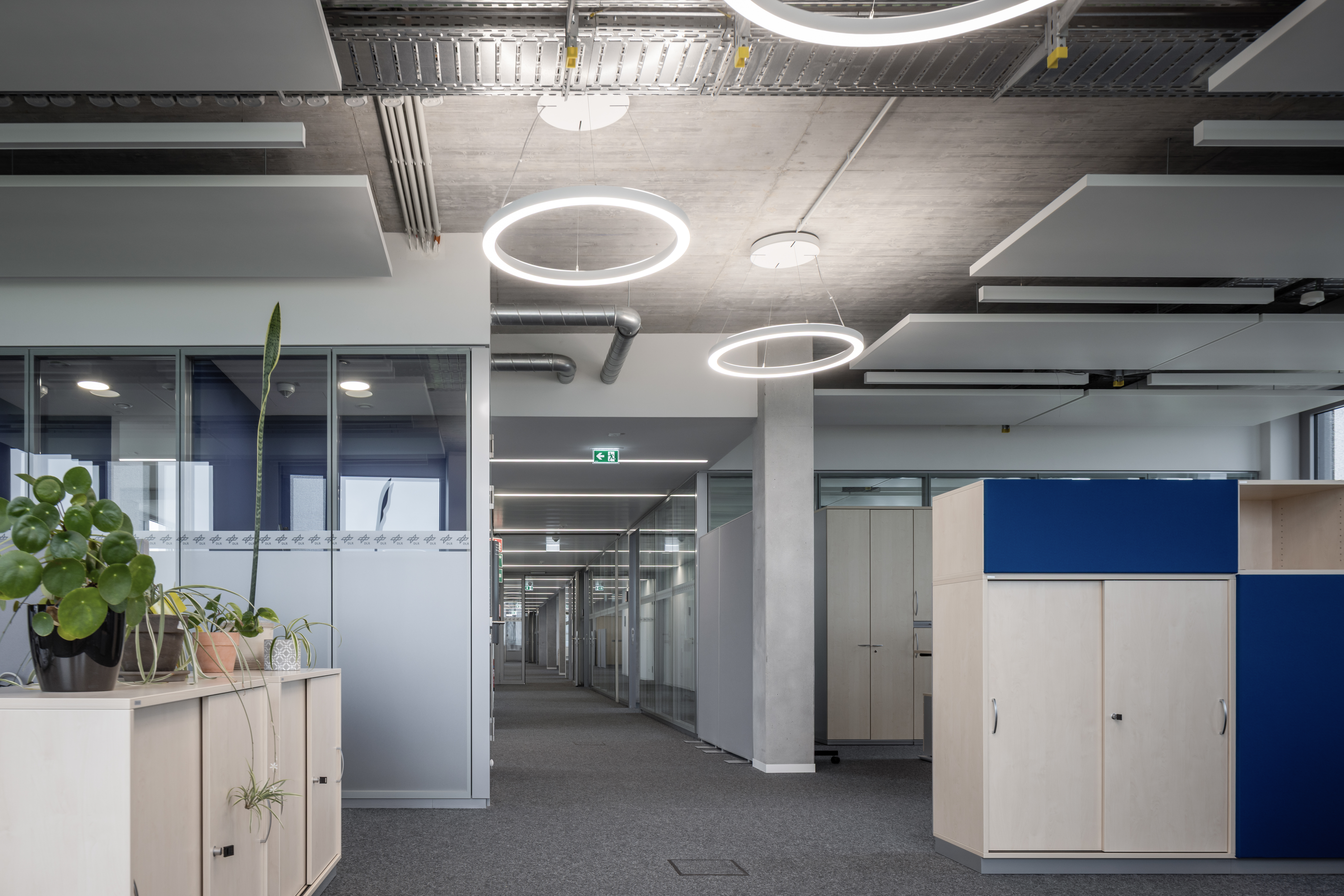
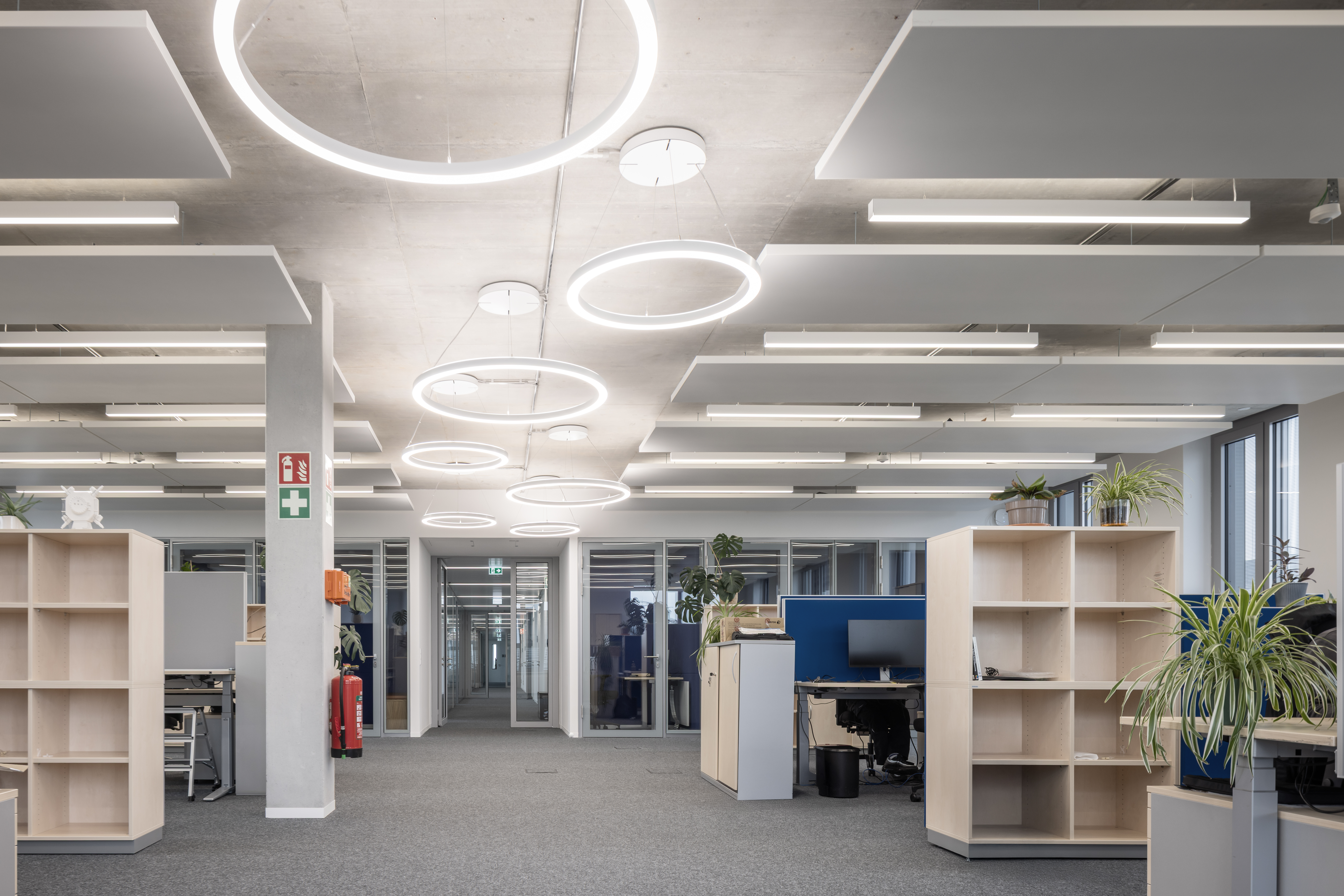
In March 2025, the German Aerospace Center (DLR) inaugurated its futuristic Institute Building within the Augsburg Technology Park. Designed by renowned Nickl & Partner Architekten, this cutting-edge facility serves approximately 70 researchers and staff, primarily focusing on the testing and simulation of gas turbines, including the development of virtual engines through BIM models and digital representations. Alongside specialized test rigs, laboratories, and contemporary open-office spaces, the building seamlessly integrates closed meeting areas, single, and double offices.
Interior Fit-Out by Lindner: High-Performance Solutions for Functionality, Design, and Energy Efficiency
Lindner Group was responsible for the
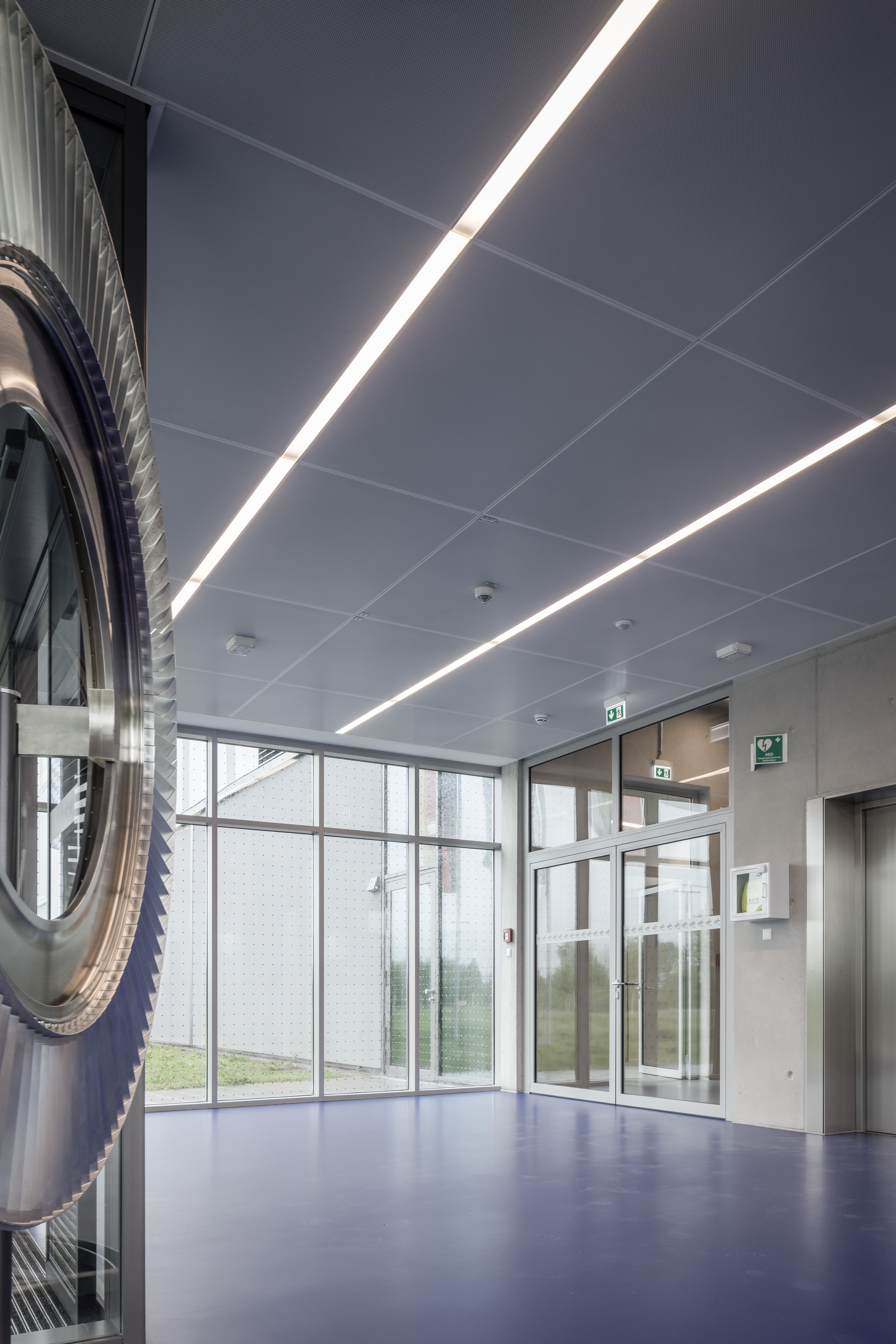
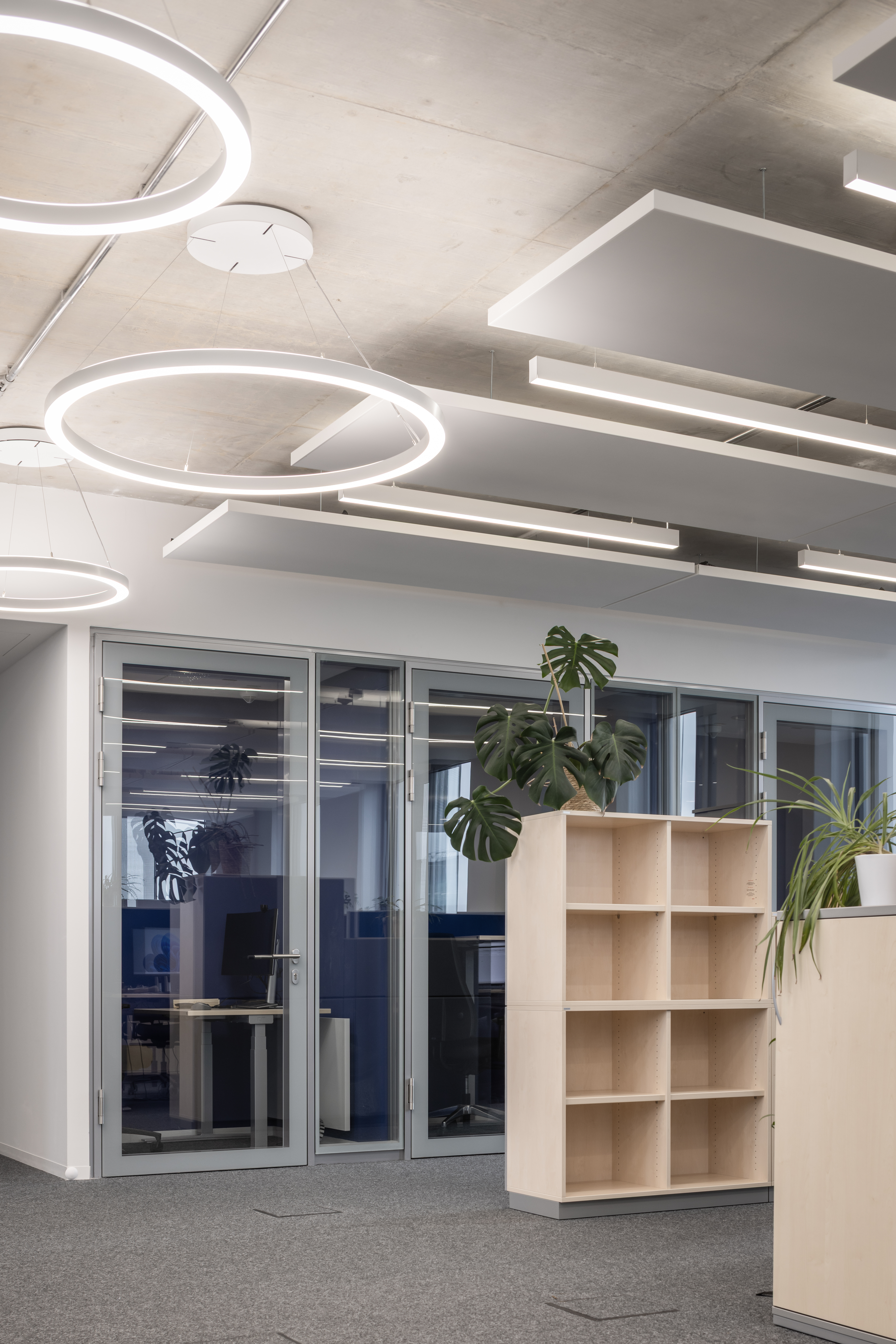
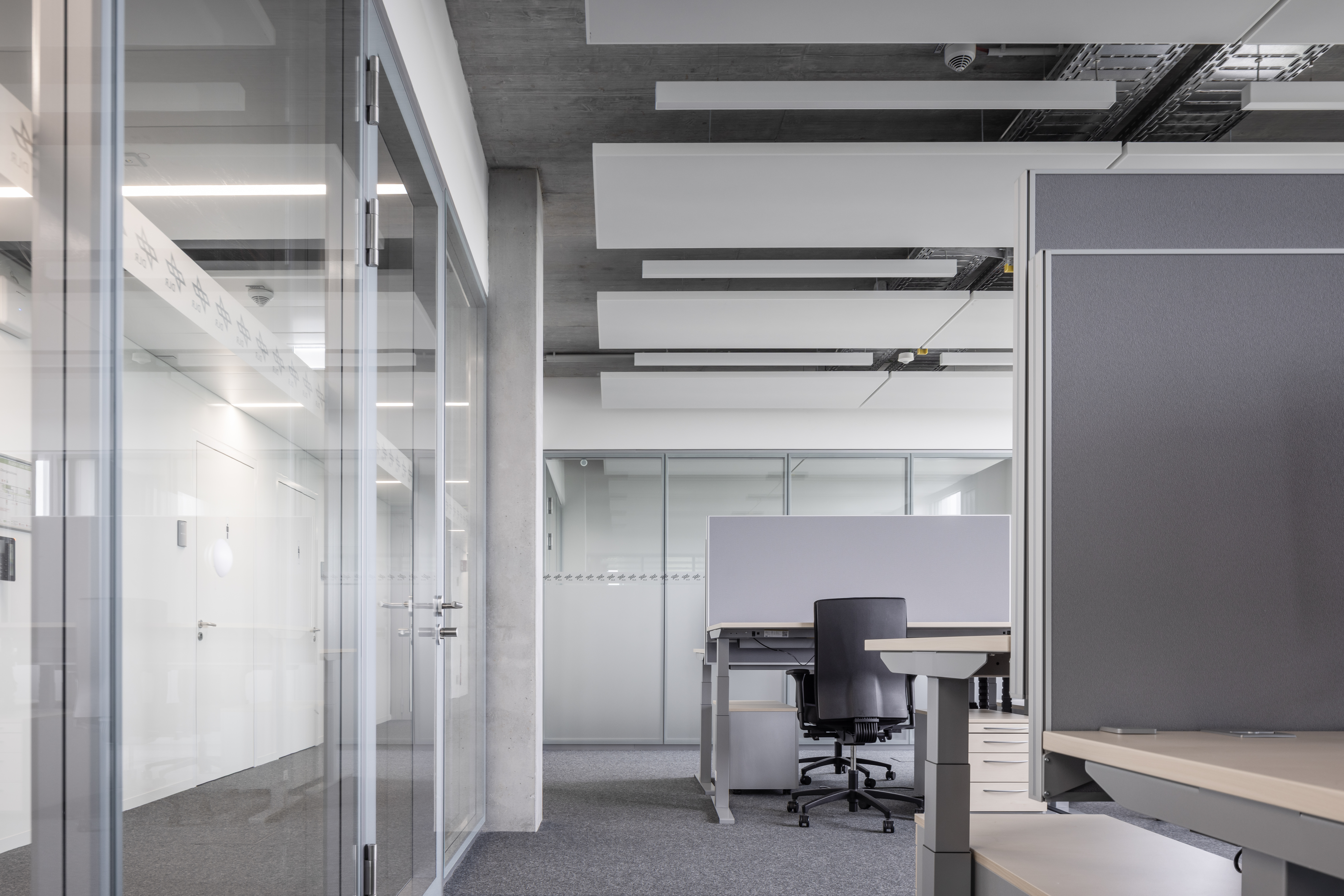
interior fit-out of the office areas, delivering customized dry construction solutions tailored to the project’s specific requirements. In addition, metal ceiling systems and ceiling sails were installed throughout office spaces and corridors, contributing to a clean architectural appearance and optimized room acoustics.
A key feature of the building is the
Plafotherm® E 200 metal ceiling system. This energy-efficient solution utilizes radiant heating and cooling technology to create a comfortable indoor climate while supporting sustainable building operation - an essential factor for modern research and office environments.
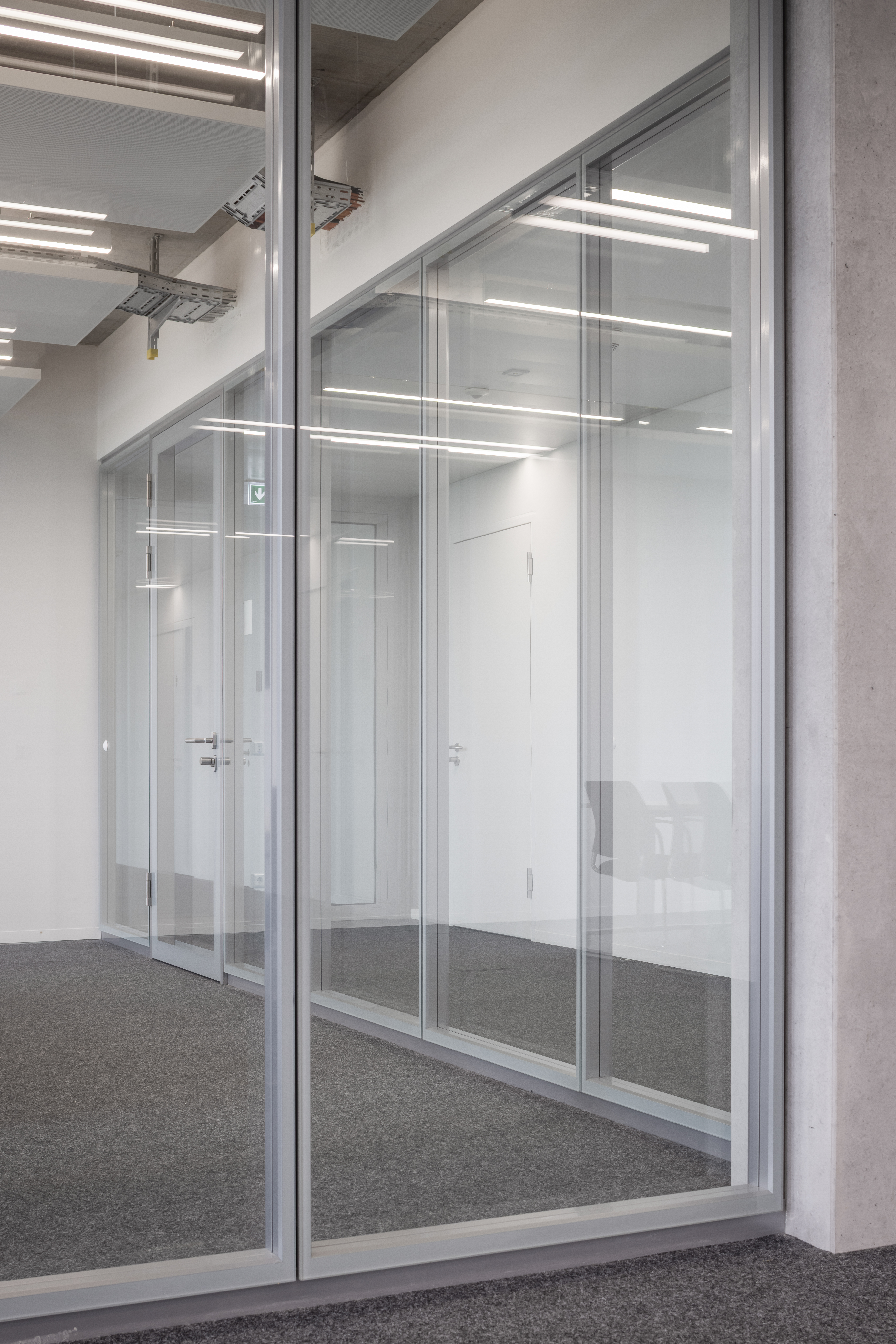
For flexible space division, flush-mounted glass partition systems
Lindner Life Freeze 137 were implemented. These bonded glass walls integrate seamlessly into the minimalist design concept and were customized to reflect DLR’s corporate identity, including applied logos and coordinated wall elements.
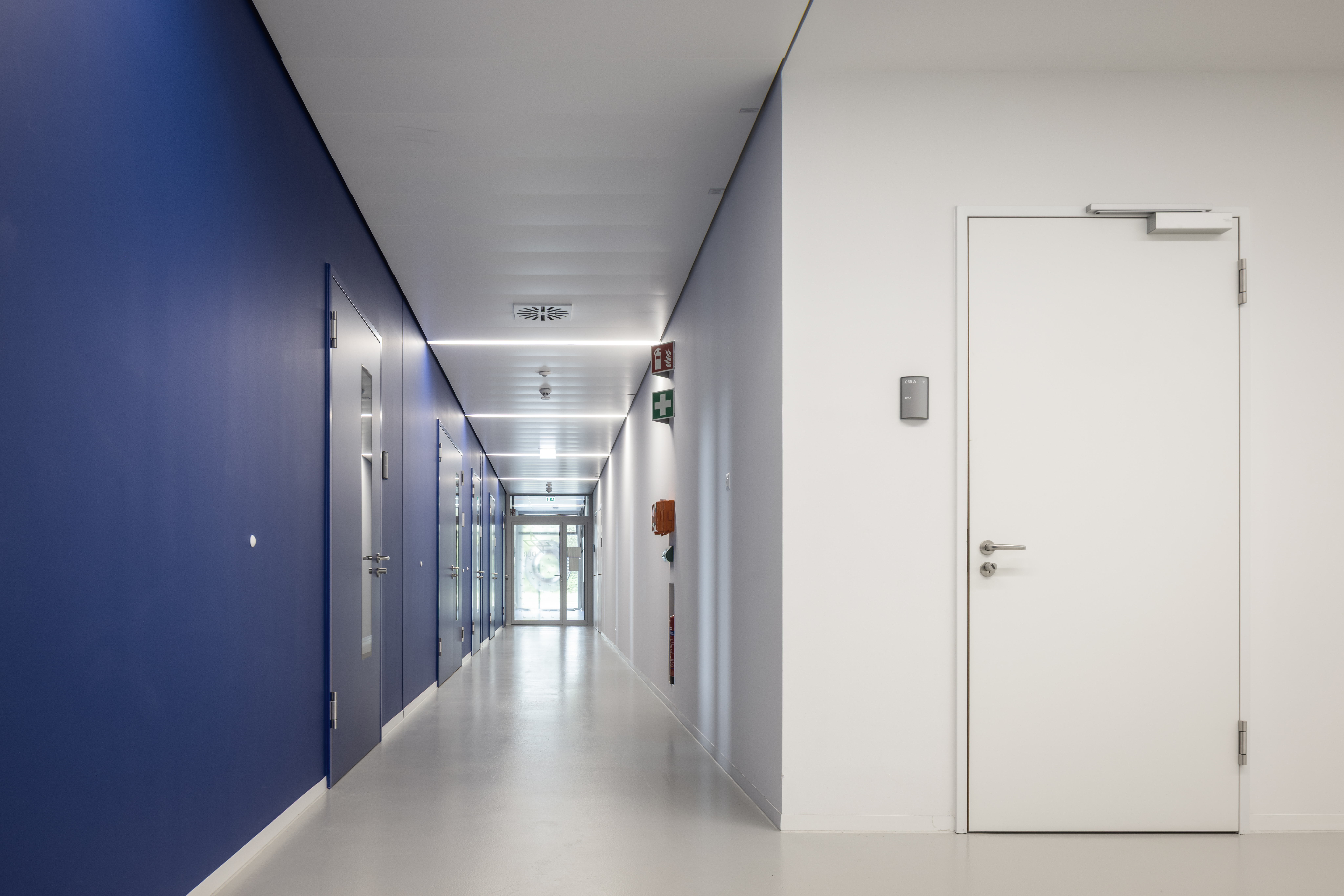
The partition systems are complemented by GTB 100 acoustic doors with aluminum frames, ensuring high sound insulation performance while maintaining a consistent design language.
Tailored Interior Solutions for High-Tech Research Environments
The combination of advanced interior systems, energy-efficient ceiling solutions, and flexible spatial concepts resulted in a precisely coordinated working environment. The implemented solutions meet the complex technical requirements of a research facility while supporting modern workplace concepts and efficient collaboration. All elements are seamlessly integrated into the overall architectural concept of the building, ensuring long-term functionality and performance.